HISTORICAL

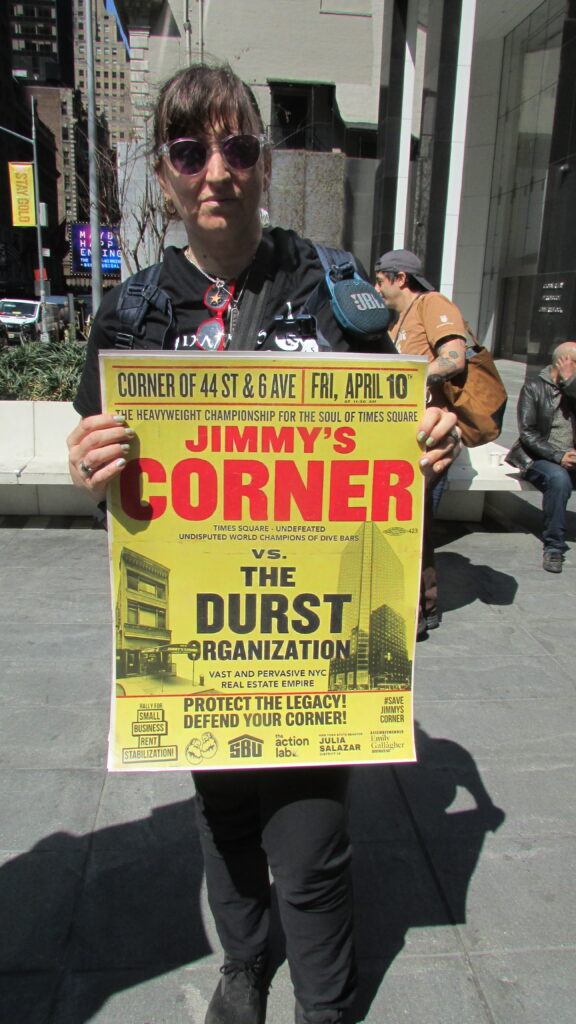
Person with sunglasses holds a large yellow poster for Jimmy's Corner in a city street.

Boxing, Times Square, and Jimmy’s Corner

West 44th Street bar fights to maintain tradition Jimmy’s Corner It happened before, when landlords raised the rent in Jack Dempsey’s restaurant in 1974, not far from Jimmy’s Corner, established in 1971. For three years, both existed, but both are victims of New York economics, or at least for Jimmy’s corner, temporarily. Jimmy’s Corner — the legendary boxing bar on West 44th Street just off Sixth Avenue in New York City — is currently fighting eviction. The situation has escalated into a very public battle between the bar’s owner, Adam Glenn, and its longtime landlord, the Durst Organization. What’s happening now • The Durst Organization is trying to evict the bar, arguing that the lease became void after founder Jimmy Glenn died in 2020. • Adam Glenn (Jimmy’s son) disputes this, saying the bar has the right to stay until 2029 and has filed suit to enforce that. • Durst says they kept the rent below market for nearly 20 years out of respect for Jimmy Glenn, but now the building is being sold, and they want the space vacated. • Patrons and legislators have rallied in Midtown — including right outside Durst’s headquarters at 44th & 6th — to support the bar and push for small‑business rent‑stabilization legislation that could help places like Jimmy’s Corner survive.   Why it matters . . .   Jimmy’s Corner isn’t just another bar — it’s one of the last true Times Square dive bars, famous for $3 beers, boxing memorabilia, and a loyal community that spans decades. Losing it would mean losing a piece of Midtown’s old soul. Current status As of the latest reporting (April 2026), the bar is still open, still fighting, and still drawing crowds — but the eviction threat is very real, and the legal battle is ongoing.We need everyone’s help!!   Jimmy’s Corner is still open, but the fight around it has intensified. The most recent developments show three parallel fronts: public rallies, legislative pressure, and an active court battle — all centered on stopping the Durst Organization from evicting the bar. Latest developments• Large rallies outside Durst’s headquarters (44th & 6th) Around 100 supporters gathered on April 10, 2026, protesting the attempted eviction and calling out Durst for trying to void the lease after Jimmy Glenn’s death. Adam Glenn, Jimmy’s son, led the rally and emphasized that the bar is “fighting for its home.” • State legislators are now involvedMultiple lawmakers — including State Sen. Julia Salazar and Assemblymember Emily Gallagher — publicly backed the bar and used the rally to push for commercial rent‑stabilization bills (S.8319/A.5568). These bills would cap rent increases and guarantee renewal rights for small businesses. They explicitly cited Jimmy’s Corner as the kind of institution the law is meant to protect.  Jimmy’s Corner is now the “test case” in Albany Advocacy groups and elected officials are using the bar’s situation to argue for statewide protections against small‑business displacement. The Durst Organization maintains it kept the rent far below market for decades and offered $250,000 to help relocate, while Adam Glenn’s lawsuit argues the lease should run through 2029. Where things stand nowJimmy’s Corner remains open and operating, but the eviction case is active. The bar has become a symbol in a much larger fight over commercial rent laws in New York, and the next major movement will likely come from the courts or from Albany’s legislative session. Please keep in touch, and if anyone has any new developments, please contact [email protected]  Adam Glenn, owner, talks to the press on April 10th, 2026

Boxing, Times Square, and Jimmy’s Corner Read More »
ALI-NORTON 50th; Trilogy complete at Yankee Stadium

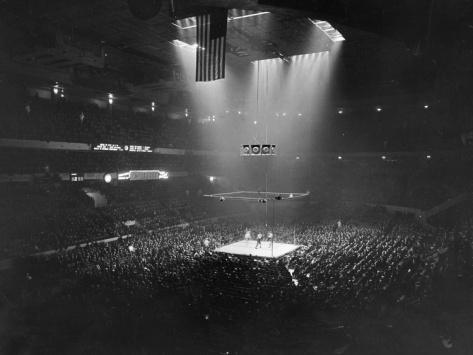
The last leg of the Trilogy Ali-Norton 1976 Louis-Schmeling 1938. Dempsey/Sharkey 1927 YANKEE STADIUM – 50 YEARS ALI Vs NORTON The last heavyweight  boxing event of the 20th Century at Yankee Stadium in 1976, when Muhammad Ali won a controversial 15 round decision over his difficult opponent in Ken Norton. Norton’s style was Ali’s kryponite, as the reigning champion had struglled in his previous two bouts in 1973.  It could be debated that Norton won all three,  but the only one registered for Norton was in March of ’73 when Norton shocked the boxing world with an upset 12 round decision. In the rematch that September, Ali struggled but managed to cop a 12 round decision. The following year, Norton was knocked out in a challenge to George Foreman’s heavyweight title, while Ali then stopped Foreman in 8 rounds later that year  to claim the crown — which led up to the third and final fight. But before this, 1975 and early 1976 had to be conquered, and Ali did have a third spectacular bout with Joe Frazier (RTD 14), while Norton s significant bout was topping Jeryy Quarry in five rounds. Other bouts Norton won included a revenge bout against Jose Luis Garcia, Pedro Lovell, Ron Stander, Larry Middleton, amoung others. Ali was busy as well – stopping Ron Lyle in 11, Chuck Wepner, Jimmy Young, and others until only one man stood the test, and that was Ken Norton.  Subway Art/Yankee Stadium SEPT 28, 2026 — 50 YEARS The Ali vs. Ken Norton III fight took place on September 28, 1976, at Yankee Stadium in New York City. It was the third and final bout between Muhammad Ali and Ken Norton, and one of the most controversial fights in boxing history. Fight Overview Event: Ali vs. Norton III Date: September 28, 1976 Location: Yankee Stadium, Bronx, New York Title at Stake: WBA/WBC Heavyweight Championship Result: Muhammad Ali won by unanimous decision (but controversially) Background First Fight (1973): Norton won by split decision, famously breaking Ali’s jaw. Second Fight (1973): Ali won by split decision in a close contest. Third Fight (1976): This was the tiebreaker and highly anticipated. The Controversy Most ringside observers and boxing analysts felt Norton had done enough to win the third fight. He outlanded Ali in punches, was more aggressive, and controlled much of the action. However, the judges awarded Ali a unanimous decision (8–7 on all three scorecards under the 15-round system). Ali himself admitted after the fight that he felt he had lost: “I honestly thought Norton won.” 🏟️ Significance One of the last big fights at Yankee Stadium before it stopped hosting boxing events. A prime example of controversial judging in boxing.   Yankee Stadium’s Legendary Role in Boxing History Yankee Stadium isn’t just a cathedral of baseball—it’s also hosted some of the most iconic moments in boxing history. Here’s a look at its knockout legacy:  Early Beginnings First boxing match: Held on May 12, 1923, main event between Floyd Johnson and Jess Willard. shortly after the stadium opened. Boxing surged in popularity during the 1920s, thanks to stars like Jack Dempsey, prompting promoters to seek massive venues like Yankee Stadium. Historic Fights That Captivated the World Joe Louis vs. Max Schmeling II (1938): A politically charged rematch where Louis delivered a first-round KO in front of 70,000 fans. It was more than a fight—it was a symbol of resistance against Nazi ideology. Rocky Marciano vs. Archie Moore (1955): Marciano came off the canvas to win by 9th-round KO in what would be his final fight, retiring undefeated. Sugar Ray Robinson vs. Kid Gavilan (1949): A controversial decision win for Robinson in a clash of future legends. Tony Zale vs. Rocky Graziano (1946): The first of their trilogy, ending in a 6th-round KO by Zale. Other Notable Bouts Sandy Saddler vs. Willie Pep: Their third bout ended with Pep retiring due to injury, giving Saddler the featherweight crown. Carmen Basilio vs. Sugar Ray Robinson: Basilio won the middleweight title in a split decision before 38,000 fans. Ingemar Johansson vs. Floyd Patterson: Johansson shocked the crowd by flooring Patterson seven times in just three rounds. Modern Revival After a 34-year hiatus, boxing returned to Yankee Stadium in 2010 with Miguel Cotto vs. Yuri Foreman, reigniting the venue’s fighting spirit. Dempsey Sharkey Photo print Ali-Norton FULL FIGHT Daily Motion

ALI-NORTON 50th; Trilogy complete at Yankee Stadium Read More »

The 1970s Heavyweight scene

Fighters coming into their own 1970’s Heavyweights — Fighters coming into their own The 1970s are widely regarded as the golden era of the heavyweight division, featuring Muhammad Ali, Joe Frazier, George Foreman, and Ken Norton, with Larry Holmes emerging at the decade’s end. Key Champions of the Decade• Joe Frazier (1970–1973)• Won the undisputed title in 1970 by defeating Jimmy Ellis.• Defended against Muhammad Ali in the legendary Fight of the Century (1971), handing Ali his first professional loss.• George Foreman (1973–1974)• Destroyed Frazier in Kingston, Jamaica (1973) to become champion.• Known for his raw power, he knocked out Ken Norton and José Roman before losing to Ali in the Rumble in the Jungle (1974).• Muhammad Ali (1974–1978)• Regained the title against Foreman in Zaire.• Fought epic trilogies with Frazier (Thrilla in Manila, 1975) and Norton.• Defended against challengers like Ron Lyle, Earnie Shavers, and Jimmy Young.• Leon Spinks (1978)• Shocked the world by defeating Ali in only his eighth professional fight.• Lost the rematch to Ali later that year, giving Ali his third reign as heavyweight champion.• Larry Holmes (1978–1979)• Emerged as the new force, defeating Ken Norton in 1978 for the WBC title.• Closed the decade as champion, setting the stage for his dominant run in the 1980s. 🥊 Notable Contenders• Ken Norton – Famous for breaking Ali’s jaw in 1973 and pushing him to three close fights.• Ron Lyle – A dangerous puncher who battled Foreman in a brutal slugfest (1976).• Earnie Shavers – Considered one of the hardest punchers in boxing history.• Jerry Quarry, Jimmy Young, Joe Bugner, Chuck Wepner – Durable contenders who tested the champions. Why the 1970s Heavyweights Stand Out• Historic rivalries: Ali vs. Frazier trilogy, Ali vs. Norton trilogy, Foreman vs. Frazier.• Global spectacles: Fight of the Century (1971), Rumble in the Jungle (1974), Thrilla in Manila (1975).• Depth of talent: Unlike many eras, the division had multiple elite fighters simultaneously. In short, 1970–1979 was the most competitive and star-studded decade in heavyweight history, with Ali reclaiming his throne, Foreman’s rise and fall, Frazier’s grit, Norton’s toughness, and Holmes’ emergence as the next great champion. VIDEOS OF 1970s Heavyweights 1970s VIDEOS  

The 1970s Heavyweight scene Read More »

1960 HEAVYWEIGHTS -Dawn of a new era

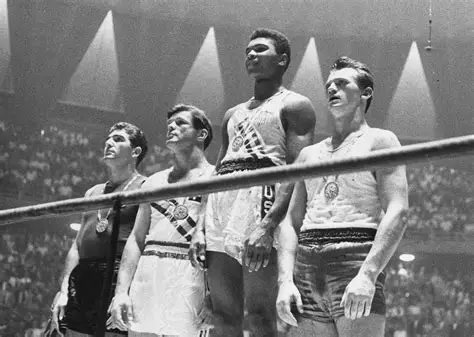
“Dawn of a New Era” 1960s Heavyweights Year by Year Capsule 1960s Heavyweights; “Dawn of a New Era” The 1960s heavyweight division was pure drama—an era of seismic shifts that redefined boxing’s landscape. It began with Floyd Patterson, the youngest heavyweight champion ever, trying to hold off the inevitable rise of Sonny Liston, a fearsome force who embodied raw power and intimidation. But the real upheaval came in 1964, when a brash, poetic 22-year-old named Cassius Clay “shook up the world” by defeating Liston. Clay—soon to be Muhammad Ali—wasn’t just a new champion; he was a cultural revolution in gloves. His style, both in and out of the ring, was unlike anything boxing had seen – fast, flamboyant, and unapologetically defiant. This decade wasn’t just about titles—it was about transformation: Ali’s rise introduced speed, strategy, and showmanship to the heavyweight game. Liston’s fall marked the end of brute dominance as the gold standard. (until Tyson) Patterson’s resilience kept the old guard relevant, even as the sport evolved. The emergence of sanctioning bodies like the WBA and WBC added complexity to championship legitimacy. And just when Ali seemed unstoppable, his career was halted due to his refusal to be drafted, leaving the division in chaos and setting the stage for the explosive 1970s. The WBA Tournament: Filling the Ali Void When Muhammad Ali was stripped of his title in 1967 for refusing military induction, the heavyweight crown was up for grabs. The World Boxing Association (WBA) launched an eight-man tournament to crown a new champion: Participants included Jimmy Ellis, Oscar Bonavena, Thad Spencer, and Ernie Terrell. Joe Frazier declined to participate, choosing instead to pursue the New York State Athletic Commission (NYSAC) title route. Jimmy Ellis won the WBA tournament, but the legitimacy of the title was questioned—especially with Frazier looming outside the bracket.  Joe Frazier’s Meteoric Rise 1964: Wins Olympic gold in Tokyo, stepping onto the world stage. 1965–1968: Goes undefeated, building a reputation for relentless pressure and a devastating left hook. 1968: Wins the NYSAC heavyweight title by defeating Buster Mathis. In February of 1970, a unified undisputed Champion was crowned when Joe Frazier stopped Jimmy Ellis in five rounds at Madison Square Garden. ****************************

1960 HEAVYWEIGHTS -Dawn of a new era Read More »

THE GOLDEN ERA HEAVYWEIGHTS OF THE 1950s

Year by Year Documentary of 1950s Heavyweight Action Marciano: The Unbeatable Champion Floyd Patterson, The Thinking Man’s Fighter The Cincinnati Cobra – Ezzard Charles THE GOLDEN ERA OF HEAVYWEIGHT BOXING Heavyweight boxing in the 1950s was a golden era for the sport, marked by legendary champions, iconic rivalries, and a gritty, action-packed style of fighting. The decade began with the reign of Ezzard Charles and ended with Floyd Patterson becoming the youngest heavyweight champion at that time. Key Boxers of the 1950s 1. Joe Louis (“The Brown Bomber”) Although his prime was in the 1930s and 1940s, Louis continued to fight until 1951. Retired in 1949, but came back due to financial troubles and was defeated by Ezzard Charles in 1950. His influence and legacy loomed large over the 1950s. 2. Ezzard Charles World Heavyweight Champion: 1950–1951 Defeated Joe Louis in a unanimous decision in 1950. Known as a skilled, technical boxer with underrated power. Lost the title to Jersey Joe Walcott in 1951. 3. Jersey Joe Walcott World Heavyweight Champion: 1951–1952 Finally won the title at age 37 after multiple attempts. Knocked out Charles in their third fight. Lost the title to Rocky Marciano in 1952. 4. Rocky Marciano (“The Brockton Blockbuster”) World Heavyweight Champion: 1952–1956 Retired undefeated at 49–0 with 43 KOs. Famous fights: Two brutal wins over Walcott and two over Charles. Known for relentless pressure, granite chin, and knockout power. Retired in 1956, leaving the title vacant. 5. Floyd Patterson World Heavyweight Champion: 1956–1959 Won the vacant title in 1956 at age 21, becoming the youngest champion at the time. Olympic gold medalist in 1952. Managed by Cus D’Amato, known for his peek-a-boo style defense. Lost the title to Ingemar Johansson in 1959. 6. Ingemar Johansson Swedish heavyweight who shocked the world by knocking out Patterson in 1959. Became heavyweight champ, setting up a trilogy that continued into the early 1960s. Style of the Era Fighters often had smaller training teams and fought more frequently. Emphasis on toughness, stamina, and power. Technical skills were evolving, but brawling and aggressive fighting were common. Fights often went 15 rounds. Cultural Impact Boxing was a top-tier sport in terms of popularity. Fights were widely broadcast on the radio and later on television. Champions were major national and international celebrities. The heavyweight title was considered one of the most prestigious titles in all of sports. Jersey Joe Walcott – Undisputed Champion ON THIS DAY – Ingemar Johansson

THE GOLDEN ERA HEAVYWEIGHTS OF THE 1950s Read More »

THE HISTORIC BATTLES OF JULY 4th

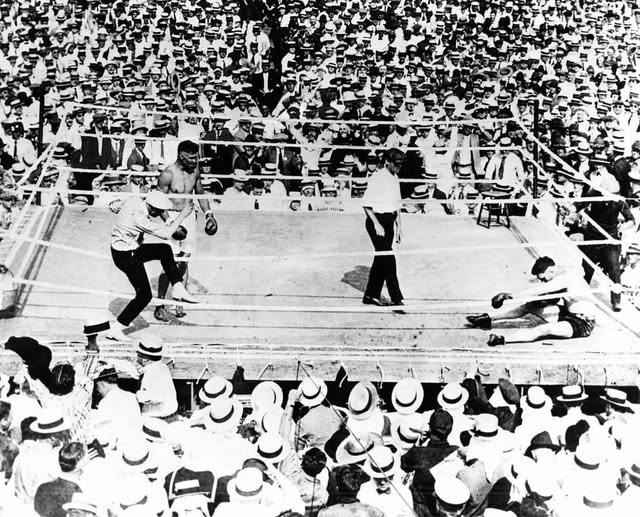
July 4th has hosted some of the most iconic and culturally charged bouts in boxing history. Here are a few standout matches that made Independence Day a battleground in more ways than one: The Fight of the Century – Jack Johnson vs. Jim Jeffries (1910) Location: Reno, Nevada Significance: The first Black heavyweight champion, Jack Johnson, defended his title against former undefeated champ Jim Jeffries. Outcome: Johnson dominated and stopped Jeffries in the 15th round. Legacy: One of the most bet-on cultural clashes of the day, still remembered for the impact it left for years to come. The Mauling in Toledo – Jack Dempsey vs. Jess Willard (1919) Location: Toledo, Ohio Significance: Dempsey, a hungry challenger, faced the much larger reigning champ Willard. Outcome: Dempsey knocked Willard down seven times in the first round and won by stoppage after the third. Legacy: Considered one of the most brutal beatings in boxing history, it launched Dempsey into superstardom. The Shelby Fiasco – Jack Dempsey vs. Tommy Gibbons (1923) Location: Shelby, Montana Significance: A small town bankrolled a Dempsey title defense, hoping to boost its profile. Outcome: Dempsey won a 15-round decision, but the event bankrupted the city. Legacy: A cautionary tale of ambition and economic overreach in boxing promotion.  Other Notables: 1911: Ad Wolgast KO’d Owen Moran 1912: Wolgast again, this time KO’ing Joe Rivers; Jack Johnson also KO’d Jim Flynn that same day 1916: Freddie Welsh DQ’d Ad Wolgast in a wild affair These fights weren’t just sporting events—they were cultural flashpoints, economic gambles, and in some cases, national reckonings—just another cultural building block in the sport of boxing in the early 20th century.

THE HISTORIC BATTLES OF JULY 4th Read More »

GREB/WALKER REVISITED

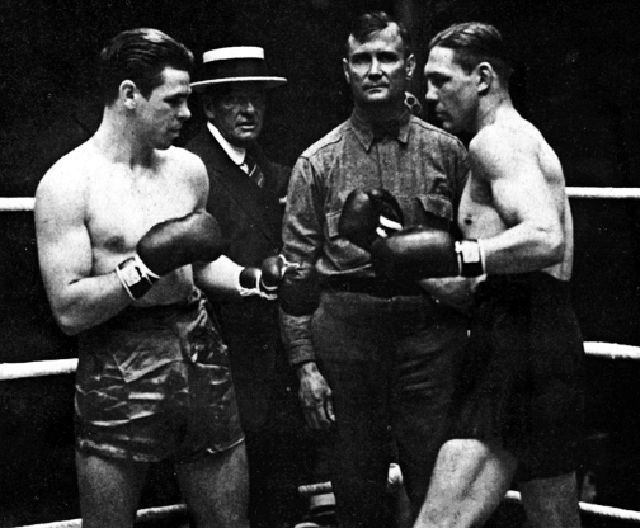
100th Anniversary of a Middleweight title fight GREB-WALKER REVISITED Flashback: 100 Years ago. July 2, 2025, One hundred years ago today—July 2, 1925—the Polo Grounds in New York City hosted one of the most ferocious and legendary battles in boxing history: Harry Greb vs. Mickey Walker for the world middleweight title. The Setup: Harry Greb, the reigning middleweight champion, was already a mythic figure—relentless, awkward, and nearly impossible to hit cleanly. Mickey Walker, the welterweight champion known as “The Toy Bulldog,” was moving up in weight, undeterred by Greb’s size or reputation. The Fight: Before a roaring crowd of over 50,000, the two men waged a 15-round war that was equal parts strategy and savagery. Greb took the early rounds, but Walker’s body attack wore him down. In the 14th round, Greb unleashed a furious assault that nearly stopped Walker—“tipsy and teetering,” as Damon Runyon described it2. Walker rallied in the 15th, but Greb’s late surge sealed a unanimous decision victory. The Legacy: This wasn’t just a title defense—it was a clash of styles, eras, and wills. Greb would die just a year later at 32, his record an astonishing 262-17-19. Walker went on to win the middleweight crown and even challenged heavyweights. A century later, this fight still echoes as a symbol of boxing’s golden age—when champions fought anyone, anywhere, and left everything in the ring. Harry Greb defended his World Middleweight Title against Mickey Walker at the Polo Grounds in New York City. The fight was a brutal, high-paced battle, with Walker relentlessly attacking Greb’s body with left hooks, while Greb countered with his own flurries. Greb took an early lead but slowed down in the middle rounds. In the 14th round, he landed a mighty right hand that staggered Walker, unleashing a furious assault that likely secured his victory. Walker fought back hard in the final round, but Greb had already done enough to win by unanimous decision. This fight was part of a benefit show for the Italian Hospital Fund, generating a gate of $375,000. It remains one of the legendary battles in boxing history, showcasing Greb’s relentless style and Walker’s incredible toughness. More about the scenarios of this middleweight championship: Remembering the Polo Grounds 100 Years — Tilting at the Pittsburgh Windmill Greb – Walker BOXREC  The most famous street fight in history – boxingscene  

GREB/WALKER REVISITED Read More »

Mike McTigue Vs Battling Siki 1923

Ring Classic: The Mike McTigue Vs Battling Siki bout in 1923 Ring Classics The fight between Mike McTigue and Battling Siki occurred on March 17, 1923, at La Scala Opera House in Dublin, Ireland. This bout was for the World Light Heavyweight Title and was held on St. Patrick’s Day. Mike McTigue emerged victorious after 20 rounds, winning by decision. The fight was notable for its intensity and the backdrop of the Irish Civil War.  Boxing was a significant part of the sports world in 1923, reflecting broader social and cultural trends. The sport was immensely popular, with many fights drawing large crowds and becoming major social events. This era was marked by the dominance of legendary fighters like Jack Dempsey, a household name and a symbol of the sport’s appeal. In 1921, the National Boxing Association (NBA) was formed, which later became the World Boxing Association (WBA), one of the major governing bodies in professional boxing. This period also saw the rise of influential promoters like Tex Rickard, who played a crucial role in organizing and popularizing major boxing matches. https://youtu.be/1KQtGTQm8No?si=bUK81aWJPHthF9u9 Mike McTigue had several key fights throughout his career that defined his legacy in the boxing world: vs. Tommy Loughran: McTigue defended his title against future Hall of Famer Tommy Loughran. Although he lost most of their bouts, he got the best of Loughran during one of their no-decision contests. vs. Young Stribling: Another notable defense of his title was against Young Stribling, a future Hall of Famer. vs. Mickey Walker McTigue also defended his title against Mickey Walker, another future Hall of Famer. vs. Paul Berlenbach (1925): McTigue lost his title to Paul Berlenbach by unanimous decision. However, he later produced one of his most outstanding performances by knocking out Berlenbach in the fourth round in 1927. vs. Tiger Flowers (1925) McTigue earned a close decision over Tiger Flowers, adding another significant victory to his record. These fights highlight McTigue’s resilience and skill in the ring, making him a memorable figure in boxing history. Battling Siki was a physically gifted fighter. His long reach was uncanny for the time, giving him advantages in the ring. Although his career was cut short due to tragedy, he engaged in other bouts against formidable foes. Here are some of his major fights: vs. Georges Carpentier (1922): This was perhaps Siki’s most famous fight. He faced Georges Carpentier, the reigning World and European champion, for the world light heavyweight championship on September 24, 1922, in Paris. Siki claimed he had agreed to take a dive but decided to fight back when Carpentier dropped him. Siki knocked out Carpentier in the sixth round, although the referee initially awarded the bout to Carpentier on a foul. The ringside judges overruled the referee, and Siki was declared the champion. vs. Kid Norfolk (1924)  Battling Siki faced Kid Norfolk on December 19, 1924, at Madison Square Garden in New York. This fight was significant as it was part of Siki’s attempt to regain his standing in the boxing world after losing his title. Unfortunately for Siki, Kid Norfolk emerged victorious, winning the bout unanimously. Kid Norfolk, known for his aggressive style and powerful punches, was a formidable opponent for Siki. This fight was one of the many notable matches in Kid Norfolk’s career, including victories over other prominent boxers. vs. Paul Berlenbach (1925)  Battling Siki faced Paul Berlenbach on March 25, 1925, at Madison Square Garden in New York. Unfortunately for Siki, the fight did not go in his favor. The referee stopped the bout after 1:12 of the 10th round, describing it as “nothing short of slaughter”. Siki endured Berlenbach’s powerful blows longer than most would have, but ultimately, he couldn’t withstand the onslaught. WHO WAS THE FIRST LIGHT HEAVYWEIGHT CHAMP? Other articles: Battling Siki: His Life On The Ropes Mike McTigue, boxing champ and saloon keeper

Mike McTigue Vs Battling Siki 1923 Read More »

THE FAT GUYS OF BOXING

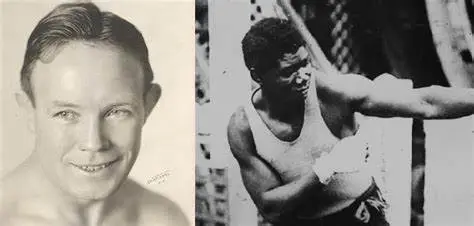
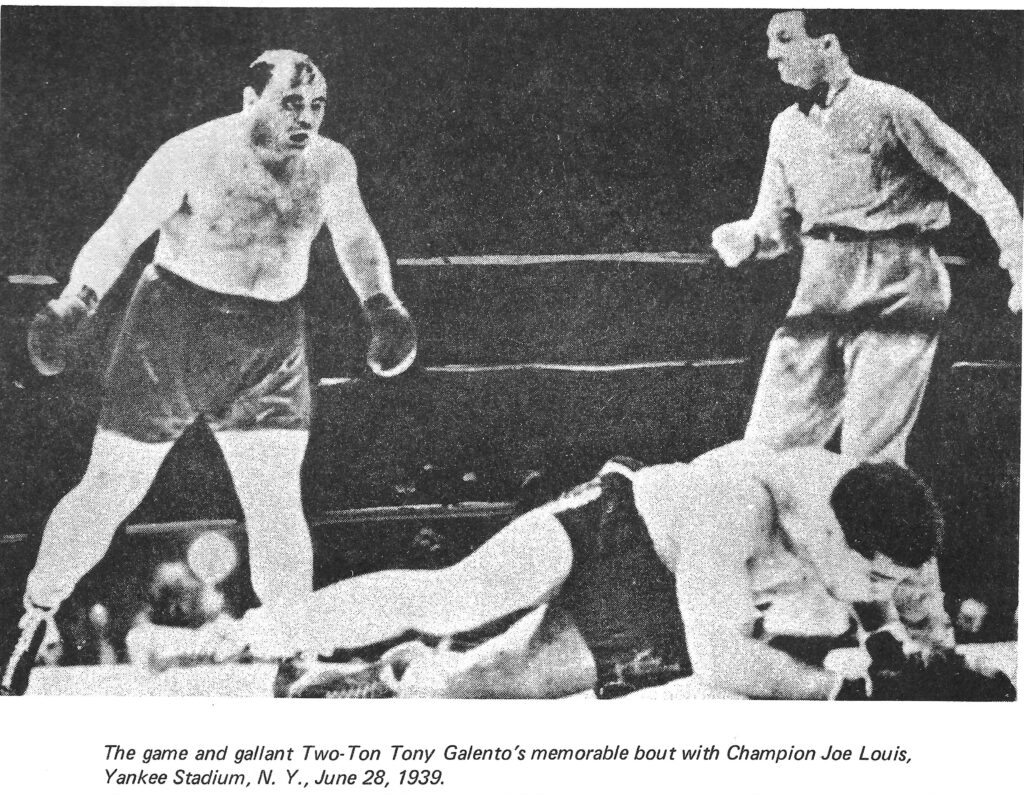
“Two Ton” Galento’s moment — floors Joe Louis in 1939. “Sailor” Willie Meehan The Fat Boys of Boxing (only heavyweights and beyond) In the historic land of heavyweight glory, few fighters threw out the discipline of the weight scale to challenge the top fighters of their day — and despite their size, some made it to challenge for the heavyweight title. One such customer was Buster Mathis, a huge heavyweight who challenged “Smokin” Joe Frazier in 1968 for the NYSAC heavyweight title since heavyweight since Muhammad Ali’s being stripped of his crown in 1967. The hulking 6’3 295 lb Mathis collapsed from the brutal Frazier attack, succumbing in the 11th round at the newly minted Madison Square Garden. Another “Fat” heavyweight was a character from New Jersey named Tony “Two Ton” Galento. Talk about a bar bruiser—Galento was all slugger and little science, but he did manage to garner a crack at the heavyweight crown against Joe Louis in 1939. The smallish 5’9 “, 240 lb Galento fought some of the toughest fighters of his era, such as Max Bear, Lou Nova and Arturo Godoy. Another “Fatboy” was an obscure West Coast sailer named Willie Meehan. Meehan was known as Jack Dempsey‘s kryptonite—a tough, four-round fighter who just had Dempsey’s number. In 1917, Dempsey had two wins, two losses, and two draws against Meehan—all four-rounders. In later life, Dempsey always acknowledged that Meehan was his toughest opponent. Several heavyweight boxers have been known for their larger physiques throughout boxing history. Here are other notable ones: Andy Ruiz Jr.: In 2019, Ruiz shocked the world by defeating Anthony Joshua to become the heavyweight champion. He weighed around 297 pounds for that fight. Claude Humphrey McBride, the 6’4 “, 360-pound heavyweight, was found by Midwest promoter Pat O’Grady and was considered the Butterbean of his day. After defeating contender Terry Daniels, McBride challenged Buster Mathis but was overcome by the latter’s experience.   Salvador Farnetti: Farnetti is known for his extreme weight, peaking at 342.5 pounds. He had a brief career with only 21 fights. Kevin Karusa: Karusa peaked at 346.5 pounds during his short professional career. Jarrell ” Big Baby” Miller, 6’4 “with unlimited weight” potential, has scaled past the three-hundred-pound meter a few times. Of the men on this list, Miller seems to carry the weight well for his size. Eric “Butterbean” Esch: Known for his massive size, Esch weighed close to 400 pounds at his peak. Despite his weight, he found great success in the ring, winning multiple world titles. Dustin Nichols: Nichols reached a peak weight of 450 pounds and had a record of 5-14-0. Antonio Johnson: Johnson weighed 380 pounds during his career and had a record of 7-3-1. https://youtu.be/Vndqe8ZI3BI?si=Yl3oZP6Iwjd4jPOm Buster Mathis Claude Humphrey McBride

THE FAT GUYS OF BOXING Read More »

The night Patterson met “The Ol’ Mongoose”

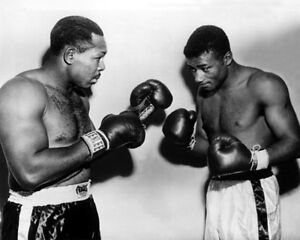
The night Patterson met the Ol’ Mongoose 1956 Chicago 30th of November – Archie Moore gets another crack at the heavyweight crown — but this time, it is for the vacated title left by the retirement of Rocky Marciano, whose last defense was against none other than the Ol’ Mongoose, Archie Moore. Floyd Patterson won the heavyweight title in 1956 by defeating Archie Moore on November 30th. Patterson knocked out Moore in the fifth round to capture the title, which the retired Rocky Marciano had vacated. At 21, Patterson became the youngest heavyweight champion in history. Patterson’s victory was notable not only because of his age but also because of his unique peekaboo style of boxing, which involved holding his gloves close to his face to protect against punches. This style, fostered by trainer Cus D’ Amato, combined with Patterson’s speed and agility, helped him outmaneuver and ultimately defeat Moore. Moore, whose quest for the title was thwarted by Rocky Marciano the year before, got a second chance, and the veteran fighter with a record of 160-20-8 was installed as a slight 7-5 favorite. D’Amato, who had guided Patterson and his peek-a-boo style, was confident that his protege had enough experience to take on his senior opponent.  Fight November 30, 1956/ as described by former heavyweight champ Rocky Marciano . . . https://youtu.be/lg2dopDFUHM?si=5MIOR9gKaFr743yOhttps://youtu.be/2eARidj04aE?si=NupF9en2N5ngTMae The Harder They Fall (1956) Available at Amazon

The night Patterson met “The Ol’ Mongoose” Read More »

Shopping Cart
Verified by MonsterInsights