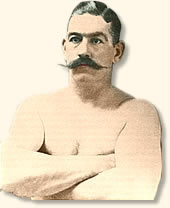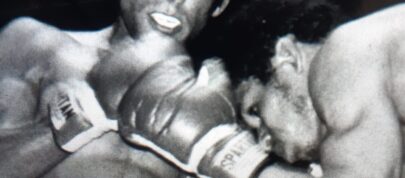
Jack Dempsey

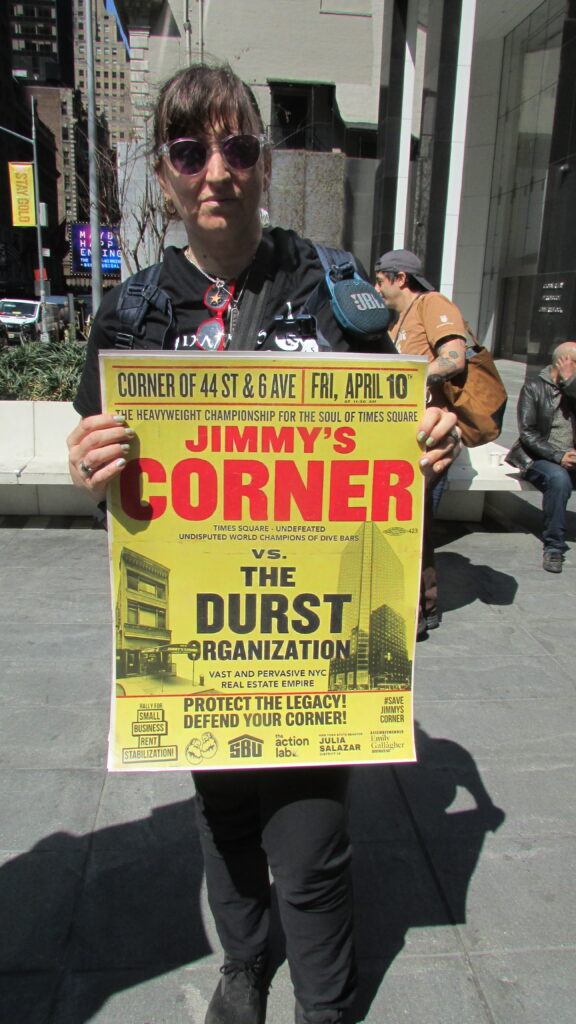
Person with sunglasses holds a large yellow poster for Jimmy's Corner in a city street.

Boxing, Times Square, and Jimmy’s Corner

West 44th Street bar fights to maintain tradition Jimmy’s Corner It happened before, when landlords raised the rent in Jack Dempsey’s restaurant in 1974, not far from Jimmy’s Corner, established in 1971. For three years, both existed, but both are victims of New York economics, or at least for Jimmy’s corner, temporarily. Jimmy’s Corner — the legendary boxing bar on West 44th Street just off Sixth Avenue in New York City — is currently fighting eviction. The situation has escalated into a very public battle between the bar’s owner, Adam Glenn, and its longtime landlord, the Durst Organization. What’s happening now • The Durst Organization is trying to evict the bar, arguing that the lease became void after founder Jimmy Glenn died in 2020. • Adam Glenn (Jimmy’s son) disputes this, saying the bar has the right to stay until 2029 and has filed suit to enforce that. • Durst says they kept the rent below market for nearly 20 years out of respect for Jimmy Glenn, but now the building is being sold, and they want the space vacated. • Patrons and legislators have rallied in Midtown — including right outside Durst’s headquarters at 44th & 6th — to support the bar and push for small‑business rent‑stabilization legislation that could help places like Jimmy’s Corner survive.   Why it matters . . .   Jimmy’s Corner isn’t just another bar — it’s one of the last true Times Square dive bars, famous for $3 beers, boxing memorabilia, and a loyal community that spans decades. Losing it would mean losing a piece of Midtown’s old soul. Current status As of the latest reporting (April 2026), the bar is still open, still fighting, and still drawing crowds — but the eviction threat is very real, and the legal battle is ongoing.We need everyone’s help!!   Jimmy’s Corner is still open, but the fight around it has intensified. The most recent developments show three parallel fronts: public rallies, legislative pressure, and an active court battle — all centered on stopping the Durst Organization from evicting the bar. Latest developments• Large rallies outside Durst’s headquarters (44th & 6th) Around 100 supporters gathered on April 10, 2026, protesting the attempted eviction and calling out Durst for trying to void the lease after Jimmy Glenn’s death. Adam Glenn, Jimmy’s son, led the rally and emphasized that the bar is “fighting for its home.” • State legislators are now involvedMultiple lawmakers — including State Sen. Julia Salazar and Assemblymember Emily Gallagher — publicly backed the bar and used the rally to push for commercial rent‑stabilization bills (S.8319/A.5568). These bills would cap rent increases and guarantee renewal rights for small businesses. They explicitly cited Jimmy’s Corner as the kind of institution the law is meant to protect.  Jimmy’s Corner is now the “test case” in Albany Advocacy groups and elected officials are using the bar’s situation to argue for statewide protections against small‑business displacement. The Durst Organization maintains it kept the rent far below market for decades and offered $250,000 to help relocate, while Adam Glenn’s lawsuit argues the lease should run through 2029. Where things stand nowJimmy’s Corner remains open and operating, but the eviction case is active. The bar has become a symbol in a much larger fight over commercial rent laws in New York, and the next major movement will likely come from the courts or from Albany’s legislative session. Please keep in touch, and if anyone has any new developments, please contact [email protected]  Adam Glenn, owner, talks to the press on April 10th, 2026

Boxing, Times Square, and Jimmy’s Corner Read More »
%alt%

THE HISTORIC BATTLES OF JULY 4th

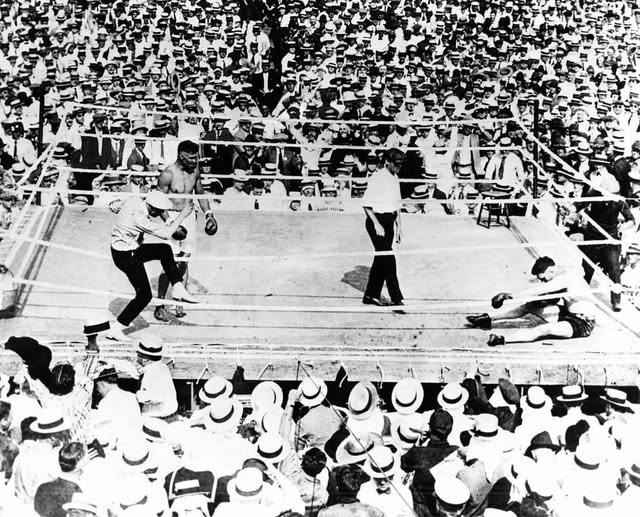
July 4th has hosted some of the most iconic and culturally charged bouts in boxing history. Here are a few standout matches that made Independence Day a battleground in more ways than one: The Fight of the Century – Jack Johnson vs. Jim Jeffries (1910) Location: Reno, Nevada Significance: The first Black heavyweight champion, Jack Johnson, defended his title against former undefeated champ Jim Jeffries. Outcome: Johnson dominated and stopped Jeffries in the 15th round. Legacy: One of the most bet-on cultural clashes of the day, still remembered for the impact it left for years to come. The Mauling in Toledo – Jack Dempsey vs. Jess Willard (1919) Location: Toledo, Ohio Significance: Dempsey, a hungry challenger, faced the much larger reigning champ Willard. Outcome: Dempsey knocked Willard down seven times in the first round and won by stoppage after the third. Legacy: Considered one of the most brutal beatings in boxing history, it launched Dempsey into superstardom. The Shelby Fiasco – Jack Dempsey vs. Tommy Gibbons (1923) Location: Shelby, Montana Significance: A small town bankrolled a Dempsey title defense, hoping to boost its profile. Outcome: Dempsey won a 15-round decision, but the event bankrupted the city. Legacy: A cautionary tale of ambition and economic overreach in boxing promotion.  Other Notables: 1911: Ad Wolgast KO’d Owen Moran 1912: Wolgast again, this time KO’ing Joe Rivers; Jack Johnson also KO’d Jim Flynn that same day 1916: Freddie Welsh DQ’d Ad Wolgast in a wild affair These fights weren’t just sporting events—they were cultural flashpoints, economic gambles, and in some cases, national reckonings—just another cultural building block in the sport of boxing in the early 20th century.

THE HISTORIC BATTLES OF JULY 4th Read More »

%alt%

Timeline of boxing historical

Timeline of boxing historical The “history of the fight” in boxing can refer to the evolution of the sport and some of the most significant bouts throughout its history. Here’s a breakdown of key moments in boxing history: Early Beginnings: Ancient Civilizations: Boxing dates back to ancient times, with depictions of the sport found in Egypt as early as 3000 BC. It was part of the ancient Olympic Games in Greece in 688 BC, where it was known as “pygmachia.” These early forms of boxing were brutal and often resulted in severe injuries or death, as there were few rules. Roman Era: Romans introduced boxing into their gladiatorial contests, but it became even more violent. Fighters wrapped their fists in leather thongs, sometimes adding metal studs to make punches more dangerous. The Rise of Modern Boxing (18th-19th Century): Bare-Knuckle Era: Modern boxing as we know it began to take shape in England during the 18th century. Bare-knuckle fighting, or prizefighting, was common, with fights having no time limits and continuing until one fighter could no longer continue. Jack Broughton and the First Rules (1743): Jack Broughton, a notable boxer, introduced a set of rules that are considered the precursor to modern boxing regulations. These rules prohibited hitting a downed opponent and introduced the concept of a 30-second count for a knocked-down fighter. London Prize Ring Rules (1838): These rules refined the sport by standardizing the dimensions of the ring and providing guidelines for how a bout should proceed, though fighters still used bare fists. The Marquis of Queensberry Rules (1867): Introduction of Gloves: The most significant shift in boxing history came with the introduction of the Marquis of Queensberry Rules. These rules mandated the use of gloves, introduced timed rounds (usually three minutes), and outlawed wrestling moves. Birth of Modern Boxing: These rules formalized boxing and made it a legitimate sport rather than a brutal spectacle. The gloves helped protect fighters’ hands and faces, while timed rounds and the 10-second count for knockdowns added structure to the game. Early 20th Century: Jack Johnson (1908-1915): The first African-American heavyweight champion, Johnson’s reign was historic not only for his boxing skills but also for breaking racial barriers. His dominance sparked controversy and societal debates on race. Jack Dempsey and the Golden Age (1920s): Known as the “Manassa Mauler,” Jack Dempsey was one of the first superstar athletes in America. His aggressive style and his dramatic fights, particularly against Gene Tunney, helped popularize boxing. Post-World War II Boxing (1940s-1950s): Joe Louis: Louis, known as the “Brown Bomber,” held the heavyweight title from 1937 to 1949 and is considered one of the greatest heavyweights of all time. His 1938 victory over Max Schmeling, a German boxer, was politically charged due to the growing tensions between the U.S. and Nazi Germany. Sugar Ray Robinson: Widely regarded as one of the greatest pound-for-pound fighters, Robinson dominated the welterweight and middleweight divisions during this era. His technical prowess, speed, and power made him a boxing legend. The Muhammad Ali Era (1960s-1970s): Muhammad Ali (formerly Cassius Clay): Ali is one of the most iconic figures in boxing history. He won his first world heavyweight title in 1964 by defeating Sonny Liston. Known for his charisma, fast footwork, and sharp wit, Ali became a global icon, both for his boxing achievements and his stance on political and social issues, including his opposition to the Vietnam War. Ali vs. Frazier Trilogy: The trilogy between Ali and Joe Frazier, particularly their first fight in 1971 (often called the “Fight of the Century”) and the third fight, the “Thrilla in Manila” (1975), is regarded as one of the greatest rivalries in sports history. George Foreman and “The Rumble in the Jungle” (1974): Ali faced George Foreman in Kinshasa, Zaire (now the Democratic Republic of the Congo), in a fight that became legendary. Ali’s use of the “rope-a-dope” strategy allowed him to absorb Foreman’s powerful punches before knocking him out in the 8th round. Modern Boxing (1980s-2000s): Mike Tyson (1986-1990): Tyson became the youngest heavyweight champion in history at the age of 20. Known for his ferocious style and knockout power, Tyson dominated the heavyweight division in the late 1980s. However, his career was marred by personal and legal issues, including a prison sentence for rape. Sugar Ray Leonard, Roberto Durán, Marvin Hagler, and Thomas Hearns (The Four Kings): These four fighters dominated the welterweight and middleweight divisions during the 1980s and had some of the most memorable fights in boxing history. Leonard’s 1980 fight with Duran, Hagler’s epic battle with Hearns in 1985, and Leonard’s controversial win over Hagler in 1987 are all legendary. Oscar De La Hoya and the 1990s Superstars: The “Golden Boy” De La Hoya was a major star in the 1990s, along with fighters like Julio César Chávez and Félix Trinidad. De La Hoya’s crossover appeal made him one of the sport’s most marketable stars. Floyd Mayweather Jr. and Manny Pacquiao (2000s-2010s): Mayweather, an undefeated champion, and Pacquiao, an eight-division champion, defined boxing for the 21st century. Their 2015 fight, dubbed the “Fight of the Century,” was one of the most anticipated and financially successful boxing matches of all time. Current Era (2020s): Tyson Fury and Anthony Joshua: In the heavyweight division, Tyson Fury, Deontay Wilder, and Anthony Joshua have emerged as dominant figures. Fury’s trilogy with Wilder, particularly their first and third fights, have been widely praised as among the greatest heavyweight bouts in modern history. Canelo Álvarez: Canelo is one of the biggest stars of this era, known for his skill, power, and versatility. He has dominated multiple weight divisions and continues to be a significant draw in the sport. Women’s Boxing: Rise of Women’s Boxing: Women’s boxing has gained more recognition in recent years, with fighters like Laila Ali, Claressa Shields, Katie Taylor, and Amanda Serrano helping to bring the sport into the mainstream. Shields, in particular, is recognized for her dominance and advocacy for women’s boxing equality. Influence of Boxing: Boxing has always

Timeline of boxing historical Read More »

Shopping Cart
Verified by MonsterInsights