Jack Johnson

%alt%

JOHNSON VS BURNS FILM REVISTED

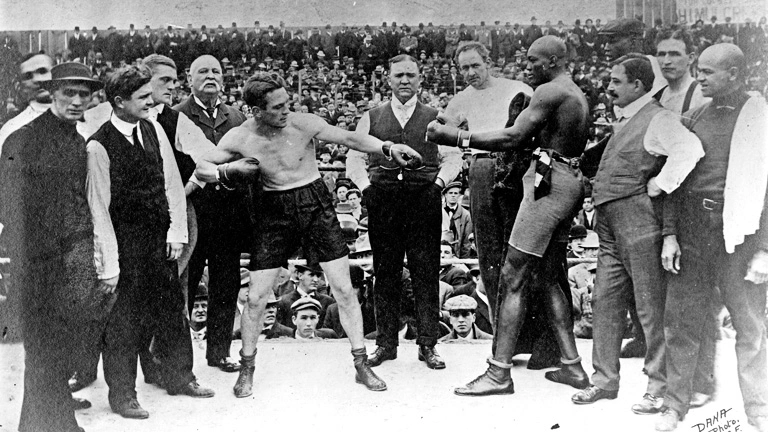
1908 Clash in Australia Johnson-Burns Revisted Date and Location: The fight took place on December 26, 1908, at Sydney Stadium in Rushcutters Bay, Australia.https://youtu.be/jw521TdQTQM?si=IWNrgPEkGQz3SFEa Here’s the clean, authoritative breakdown of the 1908 Jack Johnson vs. Tommy Burns fight film, based entirely on the most reliable modern sources. 🥊 Johnson vs. Burns (1908): What Actually Survives — and What Was MythThe 1908 Sydney fight was filmed as a two‑hour documentary, but only about 12 minutes survive today, and they do NOT include the beginning or the end of the fight. The surviving footage shows only middle‑round action, despite decades of false claims. 🎥 What the Original 1908 Film Was• Title: The Burns–Johnson Fight Date: 26 December 1908• Location: Sydney Stadium, Rushcutters Bay• Length: ~2 hours (original)• Producers: Cosens Spencer & Hugh D. McIntosh• Cameras: At least three, including imported European operators• Content included:• Training footage of both fighters• Crowd arrival• Stadium scenes• Full fight with between‑rounds activityThis was one of the most ambitious sports films ever attempted at the time. 🎞️ What Survives Today (and What Doesn’t)✅ Surviving• Roughly 12 minutes of middle‑round footage• Johnson dominating Burns with clinches, counters, and body control• Burns is tiring and unable to hurt Johnson• A knockdown that was long believed to be Round 1 — but is actually Round 7❌ Lost• Opening rounds• Final rounds• The police stoppage (never filmed)• Any footage of Burns actually going down at the endFor 60 years, collectors and documentaries repeated the myth that the film ended because police stopped the cameras to avoid showing a Black champion defeating a white champion. Modern analysis proves this was fabricated. 🧩 How the Myth StartedIn the 1960s–70s, fight‑film collector Jim Jacobs (later Mike Tyson’s co‑manager) circulated the surviving reel and claimed he had:• The opening round, and• The ending, supposedly cut short by the policeBoth claims were false. He never possessed those sections.Even Ken Burns’ Unforgivable Blackness mistakenly used the 7th‑round knockdown as the opening round. 🧼 The Modern RestorationFilm collector Carl Weingarten released the cleanest version to date, confirming:• All surviving footage comes from one reel• No beginning or ending exists• The famous “ending” clip is Round 7, not Round 14His restoration is the best visual record of the fight available today.

JOHNSON VS BURNS FILM REVISTED Read More »
%alt%

THE HISTORIC BATTLES OF JULY 4th

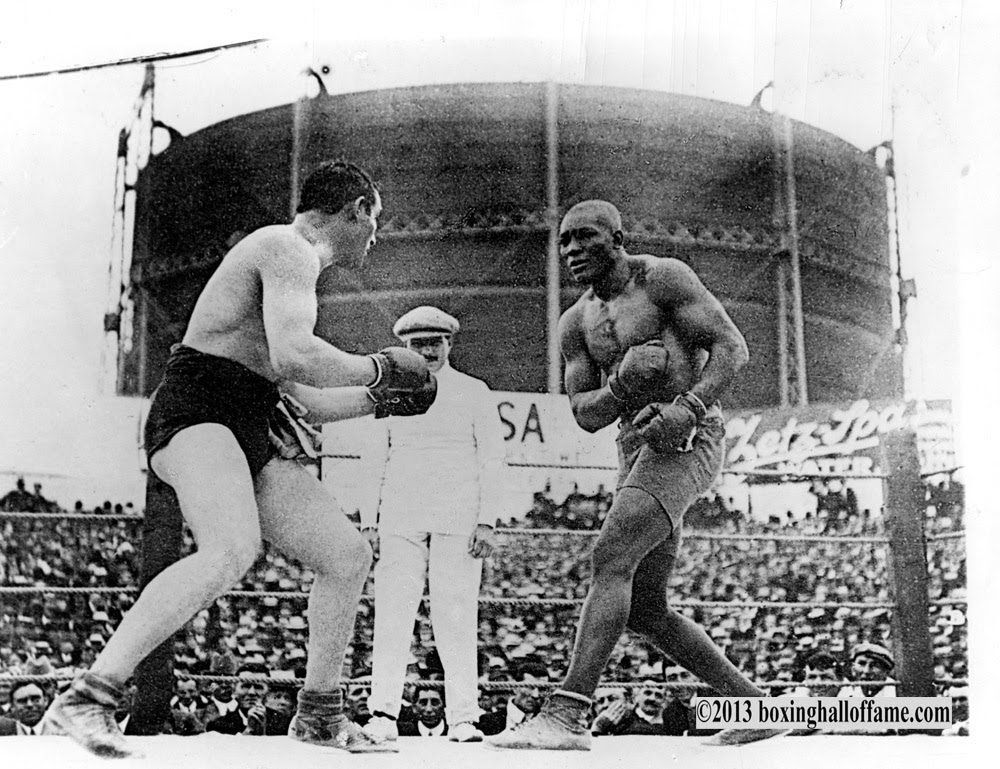
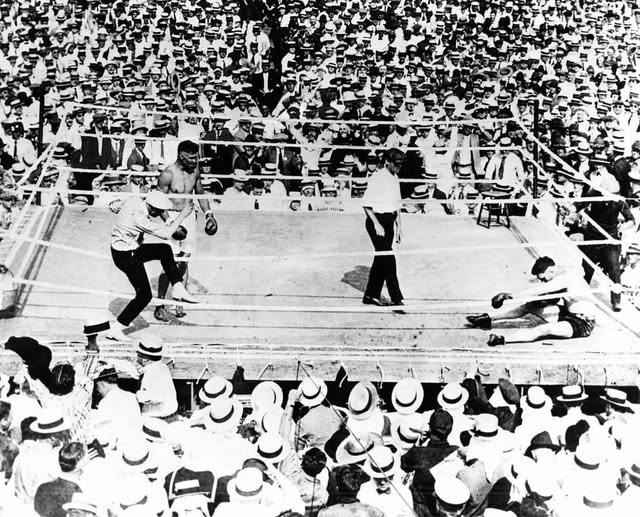
July 4th has hosted some of the most iconic and culturally charged bouts in boxing history. Here are a few standout matches that made Independence Day a battleground in more ways than one: The Fight of the Century – Jack Johnson vs. Jim Jeffries (1910) Location: Reno, Nevada Significance: The first Black heavyweight champion, Jack Johnson, defended his title against former undefeated champ Jim Jeffries. Outcome: Johnson dominated and stopped Jeffries in the 15th round. Legacy: One of the most bet-on cultural clashes of the day, still remembered for the impact it left for years to come. The Mauling in Toledo – Jack Dempsey vs. Jess Willard (1919) Location: Toledo, Ohio Significance: Dempsey, a hungry challenger, faced the much larger reigning champ Willard. Outcome: Dempsey knocked Willard down seven times in the first round and won by stoppage after the third. Legacy: Considered one of the most brutal beatings in boxing history, it launched Dempsey into superstardom. The Shelby Fiasco – Jack Dempsey vs. Tommy Gibbons (1923) Location: Shelby, Montana Significance: A small town bankrolled a Dempsey title defense, hoping to boost its profile. Outcome: Dempsey won a 15-round decision, but the event bankrupted the city. Legacy: A cautionary tale of ambition and economic overreach in boxing promotion.  Other Notables: 1911: Ad Wolgast KO’d Owen Moran 1912: Wolgast again, this time KO’ing Joe Rivers; Jack Johnson also KO’d Jim Flynn that same day 1916: Freddie Welsh DQ’d Ad Wolgast in a wild affair These fights weren’t just sporting events—they were cultural flashpoints, economic gambles, and in some cases, national reckonings—just another cultural building block in the sport of boxing in the early 20th century.

THE HISTORIC BATTLES OF JULY 4th Read More »

%alt%

Johnson Vs Ketchel 1909

MYTH, LEGEND & FISTICUFFS — THE JOHNSON – KETCHEL BOUT OF 1909. Tidbits and Blog . . . THE FISTICUFFS The legendary boxing match between Stanley Ketchel and Jack Johnson occurred on October 16, 1909, in Colma, California. Jack Johnson, the first Black heavyweight champion, faced Stanley Ketchel, the reigning middleweight champion, in what was considered a mismatch due to their size difference—Johnson outweighed Ketchel by nearly 40 pounds. The fight would be the first match between two champions from two divisions apart, an uncanny event for its time.   The fight was initially agreed to be an exhibition, but rumors to this day state that it was for the world heavyweight championship.  Johnson seemed to have his way in the early going, jabbing Ketchel easily, bleeding his nose, and even dropping him with a counter right cross in the second. Ketchel was consistently trying to get inside of Johnson’s defensive shell, throwing wild punches at times, leaving himself open for counters that Johnson capitalized on. Then the climatic 34 seconds in the 12th, of what some thought to be an exhibition match. Ketchel surprised Johnson with a knockdown in the 12th round. This enraged Johnson, who quickly retaliated with a powerful punch that knocked Ketchel out and embedded some of Ketchel’s teeth in Johnson’s glove. The fight ended with Johnson retaining his heavyweight title. MYTH The 34 seconds of the twelfth round were one of the most action-packed in heavyweight history. However, many believe it may have been choreographed for film rights, which were in the early stages of development. The same moves were made in earlier rounds, and it may have been that Ketchel may have double-crossed as to the ending of the bout. All these questions have been debated, although the fight is over a Century old. Another question mark debated was whether, when Johnson knocked Ketchel out, some of Ketchel’s teeth were embedded in Johnson’s gloves. It can be seen that Johnson is wiping something off his gloves after the knockdown; perhaps it was Ketchel’s teeth. LEGEND Stanley Ketchel and Jack Johnson were legendary boxing figures, but their careers were quite different regarding achievements and impact. Stanley Ketchel Known as the “Michigan Assassin,” Stanley Ketchel was one of the greatest middleweight boxers in history. Born in 1886, he began his professional career at 16 and quickly gained a reputation for his aggressive style and knockout power. Ketchel became the World Middleweight Champion in 1908 and defended his title multiple times. He often fought much larger opponents, including heavyweights, despite being a middleweight. Tragically, Ketchel’s life and career were cut short when he was murdered at the age of 24 in 1910. Jack Johnson Jack Johnson, nicknamed the “Galveston Giant,” was the first Black heavyweight champion, a title he held from 1908 to 1915. His victory over Tommy Burns to claim the title was groundbreaking, as it shattered racial barriers in sports during the Jim Crow era. Johnson’s career was marked by his dominance in the ring and his defiance of societal norms, including his relationships with white women, which drew significant controversy at the time. He faced numerous challenges outside the ring, including legal troubles and racial discrimination, but his legacy as a trailblazer in boxing and civil rights remains profound. Both fighters left an indelible mark on boxing history, with Ketchel remembered for his fearless fighting spirit and Johnson for his cultural and historical significance.  More on this bout JACK JOHNSON -vs- STANLEY KETCHEL 1909 – HD Documentary Analysis and Rare Footage Story of the Johnson-Ketchel bout below..

Johnson Vs Ketchel 1909 Read More »

%alt%

Joe Louis, an American Icon

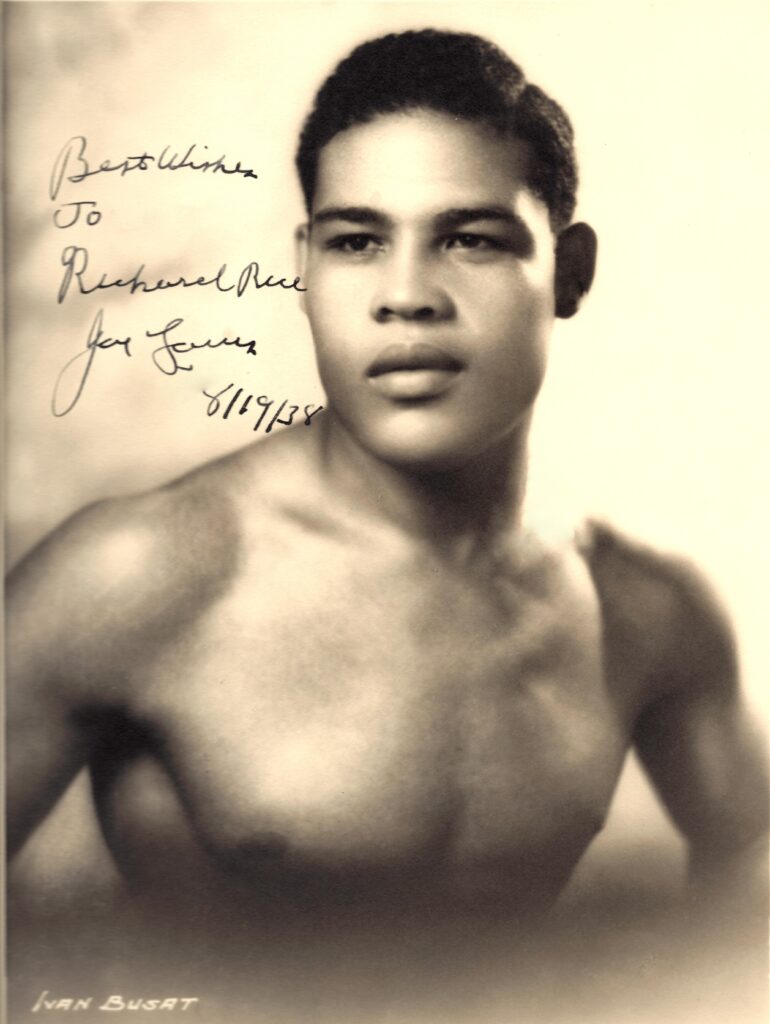
Joe Louis, professional name of Joseph Louis Barrow, American boxer known as  “The Brown Bomber.” Born in Lafayette, Alabama. Champion from 1937-1949, regarded as one of the elite heavyweight champions of the 20th Century. Louis holds the record for 25 title defenses. He won the world heavyweight title in 1937 from James J Braddock by an eighth round knockout. He retired briefly in 1949 and failed to regain the title from new champion Ezzard Charles in 1950. Prior to the Charles loss, the only other fighter to defeat Louis was Max Schmeling in 1936.  In addition to his boxing prowess, Joe Louis broke racial barriers and became a cultural icon. At a time when segregation and racial inequality were rampant in America, Louis’s success in the ring and his dignity outside of it earned him respect from people of all backgrounds. He became a hero to African Americans and was seen as a unifying figure during a divisive era.After retiring from boxing, Louis faced financial difficulties, including tax problems with the IRS, and his health declined. He passed away on April 12, 1981. Despite these challenges, his legacy as one of boxing’s all-time greats remains intact, and he is celebrated as a pioneer who transcended the sport to become a symbol of hope and resilience. Joe Louis paved the way for future African American athletes, showing that it was possible for a Black man to achieve success and be celebrated in mainstream American society. Louis’s legacy is also tied to his role in the integration of sports. While Jackie Robinson broke the color barrier in baseball in 1947, Louis’s success in boxing set a precedent that contributed to the eventual acceptance of Black athletes in other sports. Joe Louis passed away in 1981, but his legacy has lived on through numerous honors, including: Statues: There is a large statue of Joe Louis in Detroit, Michigan, his hometown, symbolizing his enduring connection to the city. Civic Honors: After his death, he was given a burial in Arlington National Cemetery, a rare honor for a civilian, acknowledging his contribution to the nation both in and out of the ring. Louis’s legacy is one of athletic greatness, cultural impact, and a role in advancing civil rights. He was a unifying figure during a divisive time in American history, and his influence is still felt today in sports, race relations, and American patriotism. Joe Louis, also known as the “Brown Bomber,” was an American professional boxer and one of the most famous heavyweight champions in the history of the sport. He held the world heavyweight title from 1937 to 1949, making him the longest-reigning heavyweight champion in boxing history. His reign lasted 12 years, and he defended his title 25 times, setting a record that still stands today. Louis was known for his powerful punching ability, disciplined technique, and calm demeanor in the ring. He fought in an era when boxing was one of the most popular sports in the U.S., and his success made him a national hero. Beyond his boxing accomplishments, Joe Louis was a symbol of hope and pride for African Americans during a time of racial segregation and discrimination in the United States. His 1938 rematch victory over German boxer Max Schmeling, after losing to Schmeling in 1936, was seen as a symbolic victory over the Nazi regime and a significant moment in both sports and political history. BULLETIN BOARD

Joe Louis, an American Icon Read More »

Shopping Cart
Verified by MonsterInsights