Jerry Quarry

%alt%

The 1970s Heavyweight scene

Fighters coming into their own 1970’s Heavyweights — Fighters coming into their own The 1970s are widely regarded as the golden era of the heavyweight division, featuring Muhammad Ali, Joe Frazier, George Foreman, and Ken Norton, with Larry Holmes emerging at the decade’s end. Key Champions of the Decade• Joe Frazier (1970–1973)• Won the undisputed title in 1970 by defeating Jimmy Ellis.• Defended against Muhammad Ali in the legendary Fight of the Century (1971), handing Ali his first professional loss.• George Foreman (1973–1974)• Destroyed Frazier in Kingston, Jamaica (1973) to become champion.• Known for his raw power, he knocked out Ken Norton and José Roman before losing to Ali in the Rumble in the Jungle (1974).• Muhammad Ali (1974–1978)• Regained the title against Foreman in Zaire.• Fought epic trilogies with Frazier (Thrilla in Manila, 1975) and Norton.• Defended against challengers like Ron Lyle, Earnie Shavers, and Jimmy Young.• Leon Spinks (1978)• Shocked the world by defeating Ali in only his eighth professional fight.• Lost the rematch to Ali later that year, giving Ali his third reign as heavyweight champion.• Larry Holmes (1978–1979)• Emerged as the new force, defeating Ken Norton in 1978 for the WBC title.• Closed the decade as champion, setting the stage for his dominant run in the 1980s. 🥊 Notable Contenders• Ken Norton – Famous for breaking Ali’s jaw in 1973 and pushing him to three close fights.• Ron Lyle – A dangerous puncher who battled Foreman in a brutal slugfest (1976).• Earnie Shavers – Considered one of the hardest punchers in boxing history.• Jerry Quarry, Jimmy Young, Joe Bugner, Chuck Wepner – Durable contenders who tested the champions. Why the 1970s Heavyweights Stand Out• Historic rivalries: Ali vs. Frazier trilogy, Ali vs. Norton trilogy, Foreman vs. Frazier.• Global spectacles: Fight of the Century (1971), Rumble in the Jungle (1974), Thrilla in Manila (1975).• Depth of talent: Unlike many eras, the division had multiple elite fighters simultaneously. In short, 1970–1979 was the most competitive and star-studded decade in heavyweight history, with Ali reclaiming his throne, Foreman’s rise and fall, Frazier’s grit, Norton’s toughness, and Holmes’ emergence as the next great champion. VIDEOS OF 1970s Heavyweights 1970s VIDEOS  

The 1970s Heavyweight scene Read More »
%alt%

1960 HEAVYWEIGHTS -Dawn of a new era

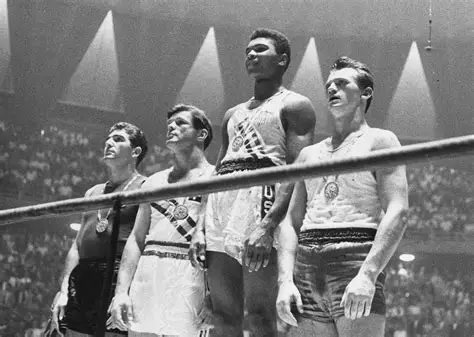
“Dawn of a New Era” 1960s Heavyweights Year by Year Capsule 1960s Heavyweights; “Dawn of a New Era” The 1960s heavyweight division was pure drama—an era of seismic shifts that redefined boxing’s landscape. It began with Floyd Patterson, the youngest heavyweight champion ever, trying to hold off the inevitable rise of Sonny Liston, a fearsome force who embodied raw power and intimidation. But the real upheaval came in 1964, when a brash, poetic 22-year-old named Cassius Clay “shook up the world” by defeating Liston. Clay—soon to be Muhammad Ali—wasn’t just a new champion; he was a cultural revolution in gloves. His style, both in and out of the ring, was unlike anything boxing had seen – fast, flamboyant, and unapologetically defiant. This decade wasn’t just about titles—it was about transformation: Ali’s rise introduced speed, strategy, and showmanship to the heavyweight game. Liston’s fall marked the end of brute dominance as the gold standard. (until Tyson) Patterson’s resilience kept the old guard relevant, even as the sport evolved. The emergence of sanctioning bodies like the WBA and WBC added complexity to championship legitimacy. And just when Ali seemed unstoppable, his career was halted due to his refusal to be drafted, leaving the division in chaos and setting the stage for the explosive 1970s. The WBA Tournament: Filling the Ali Void When Muhammad Ali was stripped of his title in 1967 for refusing military induction, the heavyweight crown was up for grabs. The World Boxing Association (WBA) launched an eight-man tournament to crown a new champion: Participants included Jimmy Ellis, Oscar Bonavena, Thad Spencer, and Ernie Terrell. Joe Frazier declined to participate, choosing instead to pursue the New York State Athletic Commission (NYSAC) title route. Jimmy Ellis won the WBA tournament, but the legitimacy of the title was questioned—especially with Frazier looming outside the bracket.  Joe Frazier’s Meteoric Rise 1964: Wins Olympic gold in Tokyo, stepping onto the world stage. 1965–1968: Goes undefeated, building a reputation for relentless pressure and a devastating left hook. 1968: Wins the NYSAC heavyweight title by defeating Buster Mathis. In February of 1970, a unified undisputed Champion was crowned when Joe Frazier stopped Jimmy Ellis in five rounds at Madison Square Garden. ****************************

1960 HEAVYWEIGHTS -Dawn of a new era Read More »

Shopping Cart
Verified by MonsterInsights