Joe Frazier

%alt%

The 1970s Heavyweight scene

Fighters coming into their own 1970’s Heavyweights — Fighters coming into their own The 1970s are widely regarded as the golden era of the heavyweight division, featuring Muhammad Ali, Joe Frazier, George Foreman, and Ken Norton, with Larry Holmes emerging at the decade’s end. Key Champions of the Decade• Joe Frazier (1970–1973)• Won the undisputed title in 1970 by defeating Jimmy Ellis.• Defended against Muhammad Ali in the legendary Fight of the Century (1971), handing Ali his first professional loss.• George Foreman (1973–1974)• Destroyed Frazier in Kingston, Jamaica (1973) to become champion.• Known for his raw power, he knocked out Ken Norton and José Roman before losing to Ali in the Rumble in the Jungle (1974).• Muhammad Ali (1974–1978)• Regained the title against Foreman in Zaire.• Fought epic trilogies with Frazier (Thrilla in Manila, 1975) and Norton.• Defended against challengers like Ron Lyle, Earnie Shavers, and Jimmy Young.• Leon Spinks (1978)• Shocked the world by defeating Ali in only his eighth professional fight.• Lost the rematch to Ali later that year, giving Ali his third reign as heavyweight champion.• Larry Holmes (1978–1979)• Emerged as the new force, defeating Ken Norton in 1978 for the WBC title.• Closed the decade as champion, setting the stage for his dominant run in the 1980s. 🥊 Notable Contenders• Ken Norton – Famous for breaking Ali’s jaw in 1973 and pushing him to three close fights.• Ron Lyle – A dangerous puncher who battled Foreman in a brutal slugfest (1976).• Earnie Shavers – Considered one of the hardest punchers in boxing history.• Jerry Quarry, Jimmy Young, Joe Bugner, Chuck Wepner – Durable contenders who tested the champions. Why the 1970s Heavyweights Stand Out• Historic rivalries: Ali vs. Frazier trilogy, Ali vs. Norton trilogy, Foreman vs. Frazier.• Global spectacles: Fight of the Century (1971), Rumble in the Jungle (1974), Thrilla in Manila (1975).• Depth of talent: Unlike many eras, the division had multiple elite fighters simultaneously. In short, 1970–1979 was the most competitive and star-studded decade in heavyweight history, with Ali reclaiming his throne, Foreman’s rise and fall, Frazier’s grit, Norton’s toughness, and Holmes’ emergence as the next great champion. VIDEOS OF 1970s Heavyweights 1970s VIDEOS  

The 1970s Heavyweight scene Read More »

%alt%

1960 HEAVYWEIGHTS -Dawn of a new era

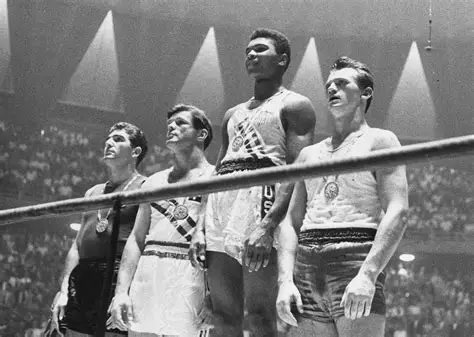
“Dawn of a New Era” 1960s Heavyweights Year by Year Capsule 1960s Heavyweights; “Dawn of a New Era” The 1960s heavyweight division was pure drama—an era of seismic shifts that redefined boxing’s landscape. It began with Floyd Patterson, the youngest heavyweight champion ever, trying to hold off the inevitable rise of Sonny Liston, a fearsome force who embodied raw power and intimidation. But the real upheaval came in 1964, when a brash, poetic 22-year-old named Cassius Clay “shook up the world” by defeating Liston. Clay—soon to be Muhammad Ali—wasn’t just a new champion; he was a cultural revolution in gloves. His style, both in and out of the ring, was unlike anything boxing had seen – fast, flamboyant, and unapologetically defiant. This decade wasn’t just about titles—it was about transformation: Ali’s rise introduced speed, strategy, and showmanship to the heavyweight game. Liston’s fall marked the end of brute dominance as the gold standard. (until Tyson) Patterson’s resilience kept the old guard relevant, even as the sport evolved. The emergence of sanctioning bodies like the WBA and WBC added complexity to championship legitimacy. And just when Ali seemed unstoppable, his career was halted due to his refusal to be drafted, leaving the division in chaos and setting the stage for the explosive 1970s. The WBA Tournament: Filling the Ali Void When Muhammad Ali was stripped of his title in 1967 for refusing military induction, the heavyweight crown was up for grabs. The World Boxing Association (WBA) launched an eight-man tournament to crown a new champion: Participants included Jimmy Ellis, Oscar Bonavena, Thad Spencer, and Ernie Terrell. Joe Frazier declined to participate, choosing instead to pursue the New York State Athletic Commission (NYSAC) title route. Jimmy Ellis won the WBA tournament, but the legitimacy of the title was questioned—especially with Frazier looming outside the bracket.  Joe Frazier’s Meteoric Rise 1964: Wins Olympic gold in Tokyo, stepping onto the world stage. 1965–1968: Goes undefeated, building a reputation for relentless pressure and a devastating left hook. 1968: Wins the NYSAC heavyweight title by defeating Buster Mathis. In February of 1970, a unified undisputed Champion was crowned when Joe Frazier stopped Jimmy Ellis in five rounds at Madison Square Garden. ****************************

1960 HEAVYWEIGHTS -Dawn of a new era Read More »

%alt%

THE LAST BIG HEAVYWEIGHT FIGHT AT THE OLD GARDEN

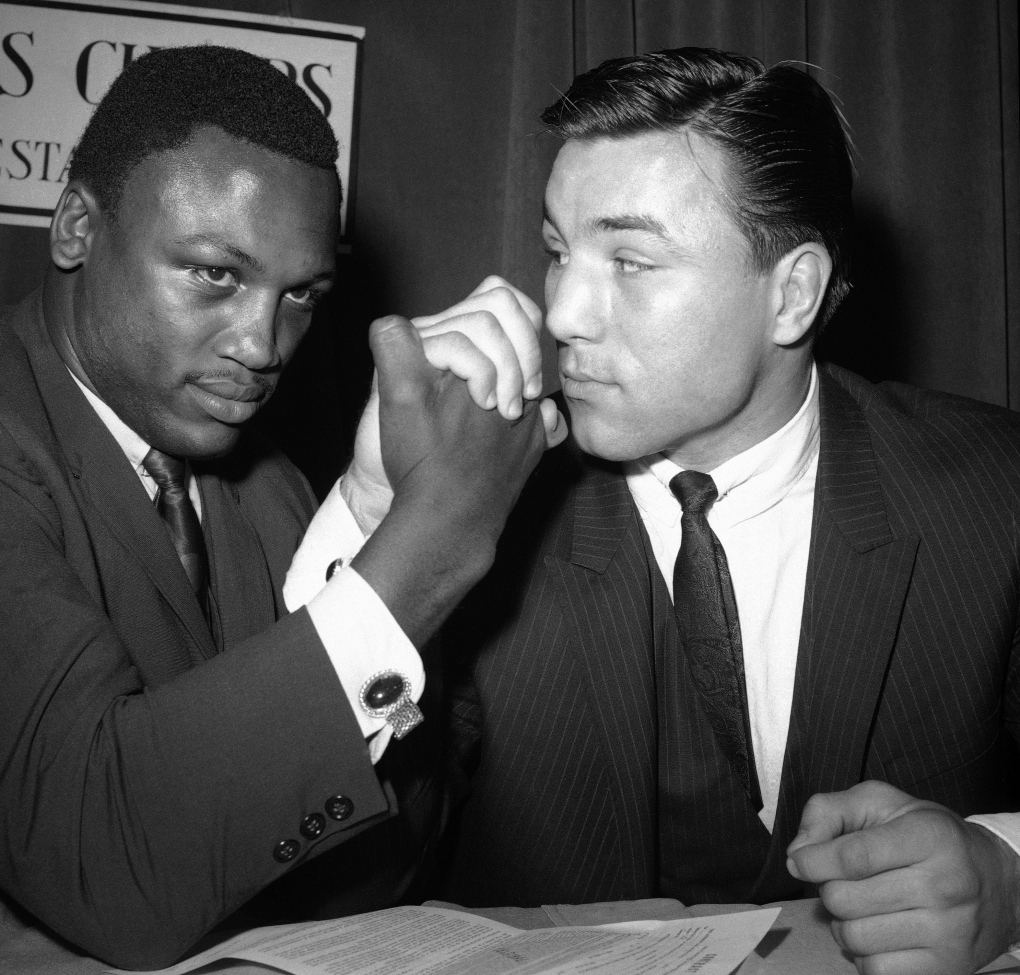
THE LAST BIG HEAVYWEIGHT FIGHT AT THE OL’ MADISON SQUARE GARDEN The Joe Frazier vs. George Chuvalo fight on July 19, 1967 was a significant and memorable bout, especially considering it was the final significant fight held at the old Madison Square Garden (located at 8th Avenue and 50th Street in New York City) before the venue moved to its current location. (33rd & 7th Ave) Key Details of the Fight: Date: July 19, 1967 Venue: Madison Square Garden (III), New York City Fighters: Joe Frazier: A rising heavyweight contender, Frazier was known for his relentless pressure and powerful left hook. He was a former Olympic gold medalist and a rising star in the heavyweight division. George Chuvalo: A tough Canadian fighter, Chuvalo was known for his durability and iron chin. He had a reputation for taking punches from some of the hardest hitters in boxing and surviving. At the time of the fight, he was considered a gatekeeper in the heavyweight division. Chuvalo had already been in the ring with top contenders and challenged for the world heavyweight title (against Muhammad Ali 3/29/1966) and lasted the full 15 rounds. Frazier was an Olympic Gold Medalist and was becoming a rising star in the heavyweight rankings,  and was coming off a tough battle with Oscar Bonavena the year before. After that bout, in which Frazier was floored twice, while winning a split decision, Smokin’ Joe resumed in his climb with impressive KO”s over Eddie Maschan and Doug Jones.  In what turned out to be an impressive  win for Frazier, it was an instrumental event because of Ali’s absence from the ring after his bout with Zoro Foley earlier that year (also at Madison Square Garden)   Significance: Frazier’s victory over Chuvalo helped solidify his place as a legitimate contender for the heavyweight title. Fight Style: The bout was a hard-fought battle, with Frazier applying his trademark aggressive style, constantly coming forward and landing powerful hooks. Chuvalo, as expected, was able to absorb a great deal of punishment but never stopped coming forward. The fight showcased Frazier’s toughness and resilience, as well as his ability to handle a fighter like Chuvalo, who was known for his ability to withstand punishment. Historical Context: This fight was particularly notable because it was the last big event held at the old Madison Square Garden before the arena closed. The original Madison Square Garden, which had hosted many iconic events, including boxing matches, concerts, and other cultural milestones, which opened in 1925, would officially close in 1968, making this fight one of its final moments in history. Aftermath and Legacy: Joe Frazier’s Career: Frazier’s victory over Chuvalo helped set the stage for his eventual title fight against Muhammad Ali in 1971. At this time, Frazier was gaining a reputation for being one of the most formidable heavyweights in the world, and this victory propelled him forward in his career. Interview: Frazier and Chuvalo 2010 Frazier Record Chuvalo Record WHAT A FIGHT!  DVD AVAILABLE ON AMAZON

THE LAST BIG HEAVYWEIGHT FIGHT AT THE OLD GARDEN Read More »

%alt%

Timeline of boxing historical

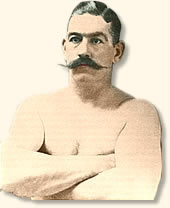
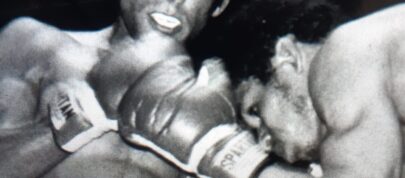
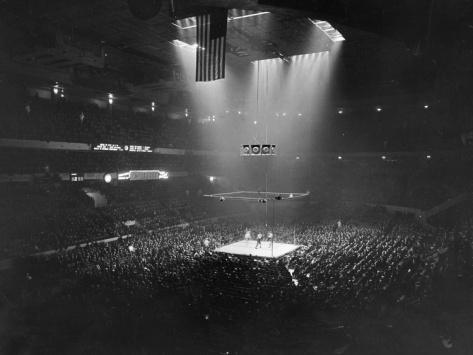
Timeline of boxing historical The “history of the fight” in boxing can refer to the evolution of the sport and some of the most significant bouts throughout its history. Here’s a breakdown of key moments in boxing history: Early Beginnings: Ancient Civilizations: Boxing dates back to ancient times, with depictions of the sport found in Egypt as early as 3000 BC. It was part of the ancient Olympic Games in Greece in 688 BC, where it was known as “pygmachia.” These early forms of boxing were brutal and often resulted in severe injuries or death, as there were few rules. Roman Era: Romans introduced boxing into their gladiatorial contests, but it became even more violent. Fighters wrapped their fists in leather thongs, sometimes adding metal studs to make punches more dangerous. The Rise of Modern Boxing (18th-19th Century): Bare-Knuckle Era: Modern boxing as we know it began to take shape in England during the 18th century. Bare-knuckle fighting, or prizefighting, was common, with fights having no time limits and continuing until one fighter could no longer continue. Jack Broughton and the First Rules (1743): Jack Broughton, a notable boxer, introduced a set of rules that are considered the precursor to modern boxing regulations. These rules prohibited hitting a downed opponent and introduced the concept of a 30-second count for a knocked-down fighter. London Prize Ring Rules (1838): These rules refined the sport by standardizing the dimensions of the ring and providing guidelines for how a bout should proceed, though fighters still used bare fists. The Marquis of Queensberry Rules (1867): Introduction of Gloves: The most significant shift in boxing history came with the introduction of the Marquis of Queensberry Rules. These rules mandated the use of gloves, introduced timed rounds (usually three minutes), and outlawed wrestling moves. Birth of Modern Boxing: These rules formalized boxing and made it a legitimate sport rather than a brutal spectacle. The gloves helped protect fighters’ hands and faces, while timed rounds and the 10-second count for knockdowns added structure to the game. Early 20th Century: Jack Johnson (1908-1915): The first African-American heavyweight champion, Johnson’s reign was historic not only for his boxing skills but also for breaking racial barriers. His dominance sparked controversy and societal debates on race. Jack Dempsey and the Golden Age (1920s): Known as the “Manassa Mauler,” Jack Dempsey was one of the first superstar athletes in America. His aggressive style and his dramatic fights, particularly against Gene Tunney, helped popularize boxing. Post-World War II Boxing (1940s-1950s): Joe Louis: Louis, known as the “Brown Bomber,” held the heavyweight title from 1937 to 1949 and is considered one of the greatest heavyweights of all time. His 1938 victory over Max Schmeling, a German boxer, was politically charged due to the growing tensions between the U.S. and Nazi Germany. Sugar Ray Robinson: Widely regarded as one of the greatest pound-for-pound fighters, Robinson dominated the welterweight and middleweight divisions during this era. His technical prowess, speed, and power made him a boxing legend. The Muhammad Ali Era (1960s-1970s): Muhammad Ali (formerly Cassius Clay): Ali is one of the most iconic figures in boxing history. He won his first world heavyweight title in 1964 by defeating Sonny Liston. Known for his charisma, fast footwork, and sharp wit, Ali became a global icon, both for his boxing achievements and his stance on political and social issues, including his opposition to the Vietnam War. Ali vs. Frazier Trilogy: The trilogy between Ali and Joe Frazier, particularly their first fight in 1971 (often called the “Fight of the Century”) and the third fight, the “Thrilla in Manila” (1975), is regarded as one of the greatest rivalries in sports history. George Foreman and “The Rumble in the Jungle” (1974): Ali faced George Foreman in Kinshasa, Zaire (now the Democratic Republic of the Congo), in a fight that became legendary. Ali’s use of the “rope-a-dope” strategy allowed him to absorb Foreman’s powerful punches before knocking him out in the 8th round. Modern Boxing (1980s-2000s): Mike Tyson (1986-1990): Tyson became the youngest heavyweight champion in history at the age of 20. Known for his ferocious style and knockout power, Tyson dominated the heavyweight division in the late 1980s. However, his career was marred by personal and legal issues, including a prison sentence for rape. Sugar Ray Leonard, Roberto Durán, Marvin Hagler, and Thomas Hearns (The Four Kings): These four fighters dominated the welterweight and middleweight divisions during the 1980s and had some of the most memorable fights in boxing history. Leonard’s 1980 fight with Duran, Hagler’s epic battle with Hearns in 1985, and Leonard’s controversial win over Hagler in 1987 are all legendary. Oscar De La Hoya and the 1990s Superstars: The “Golden Boy” De La Hoya was a major star in the 1990s, along with fighters like Julio César Chávez and Félix Trinidad. De La Hoya’s crossover appeal made him one of the sport’s most marketable stars. Floyd Mayweather Jr. and Manny Pacquiao (2000s-2010s): Mayweather, an undefeated champion, and Pacquiao, an eight-division champion, defined boxing for the 21st century. Their 2015 fight, dubbed the “Fight of the Century,” was one of the most anticipated and financially successful boxing matches of all time. Current Era (2020s): Tyson Fury and Anthony Joshua: In the heavyweight division, Tyson Fury, Deontay Wilder, and Anthony Joshua have emerged as dominant figures. Fury’s trilogy with Wilder, particularly their first and third fights, have been widely praised as among the greatest heavyweight bouts in modern history. Canelo Álvarez: Canelo is one of the biggest stars of this era, known for his skill, power, and versatility. He has dominated multiple weight divisions and continues to be a significant draw in the sport. Women’s Boxing: Rise of Women’s Boxing: Women’s boxing has gained more recognition in recent years, with fighters like Laila Ali, Claressa Shields, Katie Taylor, and Amanda Serrano helping to bring the sport into the mainstream. Shields, in particular, is recognized for her dominance and advocacy for women’s boxing equality. Influence of Boxing: Boxing has always
Timeline of boxing historical Read More »

%alt%

Joe Louis, an American Icon

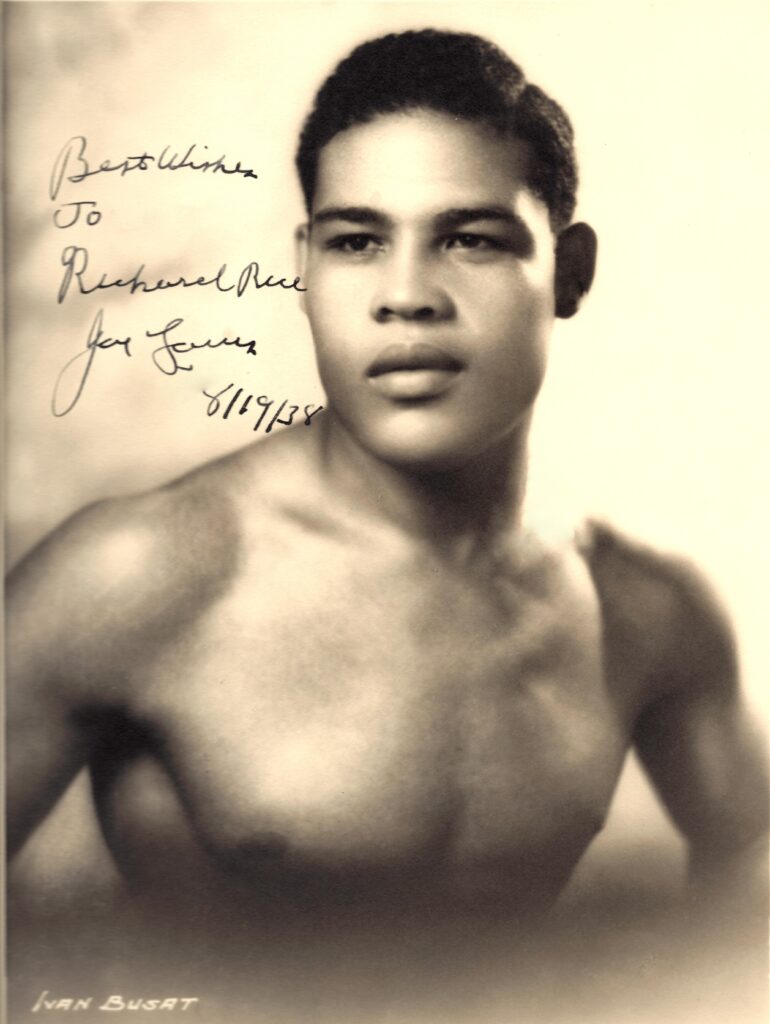
Joe Louis, professional name of Joseph Louis Barrow, American boxer known as  “The Brown Bomber.” Born in Lafayette, Alabama. Champion from 1937-1949, regarded as one of the elite heavyweight champions of the 20th Century. Louis holds the record for 25 title defenses. He won the world heavyweight title in 1937 from James J Braddock by an eighth round knockout. He retired briefly in 1949 and failed to regain the title from new champion Ezzard Charles in 1950. Prior to the Charles loss, the only other fighter to defeat Louis was Max Schmeling in 1936.  In addition to his boxing prowess, Joe Louis broke racial barriers and became a cultural icon. At a time when segregation and racial inequality were rampant in America, Louis’s success in the ring and his dignity outside of it earned him respect from people of all backgrounds. He became a hero to African Americans and was seen as a unifying figure during a divisive era.After retiring from boxing, Louis faced financial difficulties, including tax problems with the IRS, and his health declined. He passed away on April 12, 1981. Despite these challenges, his legacy as one of boxing’s all-time greats remains intact, and he is celebrated as a pioneer who transcended the sport to become a symbol of hope and resilience. Joe Louis paved the way for future African American athletes, showing that it was possible for a Black man to achieve success and be celebrated in mainstream American society. Louis’s legacy is also tied to his role in the integration of sports. While Jackie Robinson broke the color barrier in baseball in 1947, Louis’s success in boxing set a precedent that contributed to the eventual acceptance of Black athletes in other sports. Joe Louis passed away in 1981, but his legacy has lived on through numerous honors, including: Statues: There is a large statue of Joe Louis in Detroit, Michigan, his hometown, symbolizing his enduring connection to the city. Civic Honors: After his death, he was given a burial in Arlington National Cemetery, a rare honor for a civilian, acknowledging his contribution to the nation both in and out of the ring. Louis’s legacy is one of athletic greatness, cultural impact, and a role in advancing civil rights. He was a unifying figure during a divisive time in American history, and his influence is still felt today in sports, race relations, and American patriotism. Joe Louis, also known as the “Brown Bomber,” was an American professional boxer and one of the most famous heavyweight champions in the history of the sport. He held the world heavyweight title from 1937 to 1949, making him the longest-reigning heavyweight champion in boxing history. His reign lasted 12 years, and he defended his title 25 times, setting a record that still stands today. Louis was known for his powerful punching ability, disciplined technique, and calm demeanor in the ring. He fought in an era when boxing was one of the most popular sports in the U.S., and his success made him a national hero. Beyond his boxing accomplishments, Joe Louis was a symbol of hope and pride for African Americans during a time of racial segregation and discrimination in the United States. His 1938 rematch victory over German boxer Max Schmeling, after losing to Schmeling in 1936, was seen as a symbolic victory over the Nazi regime and a significant moment in both sports and political history. BULLETIN BOARD

Joe Louis, an American Icon Read More »

Shopping Cart
Verified by MonsterInsights