Rocky Marciano

%alt%

THE GOLDEN ERA HEAVYWEIGHTS OF THE 1950s

Year by Year Documentary of 1950s Heavyweight Action Marciano: The Unbeatable Champion Floyd Patterson, The Thinking Man’s Fighter The Cincinnati Cobra – Ezzard Charles THE GOLDEN ERA OF HEAVYWEIGHT BOXING Heavyweight boxing in the 1950s was a golden era for the sport, marked by legendary champions, iconic rivalries, and a gritty, action-packed style of fighting. The decade began with the reign of Ezzard Charles and ended with Floyd Patterson becoming the youngest heavyweight champion at that time. Key Boxers of the 1950s 1. Joe Louis (“The Brown Bomber”) Although his prime was in the 1930s and 1940s, Louis continued to fight until 1951. Retired in 1949, but came back due to financial troubles and was defeated by Ezzard Charles in 1950. His influence and legacy loomed large over the 1950s. 2. Ezzard Charles World Heavyweight Champion: 1950–1951 Defeated Joe Louis in a unanimous decision in 1950. Known as a skilled, technical boxer with underrated power. Lost the title to Jersey Joe Walcott in 1951. 3. Jersey Joe Walcott World Heavyweight Champion: 1951–1952 Finally won the title at age 37 after multiple attempts. Knocked out Charles in their third fight. Lost the title to Rocky Marciano in 1952. 4. Rocky Marciano (“The Brockton Blockbuster”) World Heavyweight Champion: 1952–1956 Retired undefeated at 49–0 with 43 KOs. Famous fights: Two brutal wins over Walcott and two over Charles. Known for relentless pressure, granite chin, and knockout power. Retired in 1956, leaving the title vacant. 5. Floyd Patterson World Heavyweight Champion: 1956–1959 Won the vacant title in 1956 at age 21, becoming the youngest champion at the time. Olympic gold medalist in 1952. Managed by Cus D’Amato, known for his peek-a-boo style defense. Lost the title to Ingemar Johansson in 1959. 6. Ingemar Johansson Swedish heavyweight who shocked the world by knocking out Patterson in 1959. Became heavyweight champ, setting up a trilogy that continued into the early 1960s. Style of the Era Fighters often had smaller training teams and fought more frequently. Emphasis on toughness, stamina, and power. Technical skills were evolving, but brawling and aggressive fighting were common. Fights often went 15 rounds. Cultural Impact Boxing was a top-tier sport in terms of popularity. Fights were widely broadcast on the radio and later on television. Champions were major national and international celebrities. The heavyweight title was considered one of the most prestigious titles in all of sports. Jersey Joe Walcott – Undisputed Champion ON THIS DAY – Ingemar Johansson

THE GOLDEN ERA HEAVYWEIGHTS OF THE 1950s Read More »
%alt%

The night Patterson met “The Ol’ Mongoose”

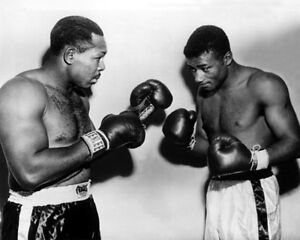
The night Patterson met the Ol’ Mongoose 1956 Chicago 30th of November – Archie Moore gets another crack at the heavyweight crown — but this time, it is for the vacated title left by the retirement of Rocky Marciano, whose last defense was against none other than the Ol’ Mongoose, Archie Moore. Floyd Patterson won the heavyweight title in 1956 by defeating Archie Moore on November 30th. Patterson knocked out Moore in the fifth round to capture the title, which the retired Rocky Marciano had vacated. At 21, Patterson became the youngest heavyweight champion in history. Patterson’s victory was notable not only because of his age but also because of his unique peekaboo style of boxing, which involved holding his gloves close to his face to protect against punches. This style, fostered by trainer Cus D’ Amato, combined with Patterson’s speed and agility, helped him outmaneuver and ultimately defeat Moore. Moore, whose quest for the title was thwarted by Rocky Marciano the year before, got a second chance, and the veteran fighter with a record of 160-20-8 was installed as a slight 7-5 favorite. D’Amato, who had guided Patterson and his peek-a-boo style, was confident that his protege had enough experience to take on his senior opponent.  Fight November 30, 1956/ as described by former heavyweight champ Rocky Marciano . . . https://youtu.be/lg2dopDFUHM?si=5MIOR9gKaFr743yOhttps://youtu.be/2eARidj04aE?si=NupF9en2N5ngTMae The Harder They Fall (1956) Available at Amazon

The night Patterson met “The Ol’ Mongoose” Read More »

%alt%

Joe Louis, an American Icon

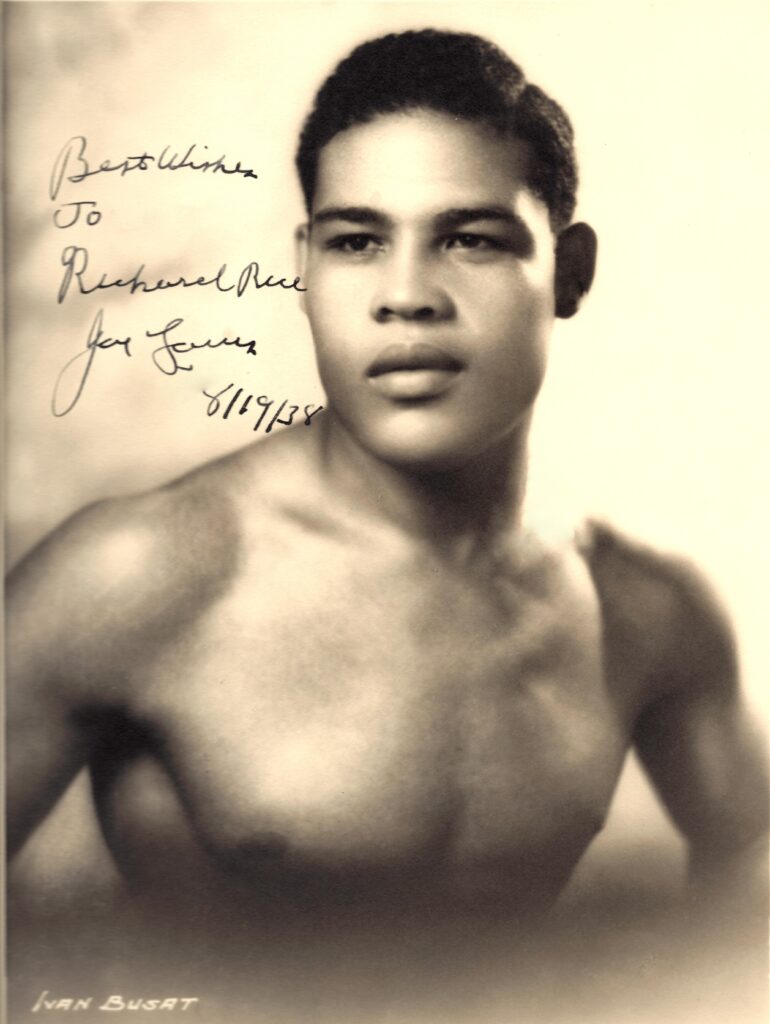
Joe Louis, professional name of Joseph Louis Barrow, American boxer known as  “The Brown Bomber.” Born in Lafayette, Alabama. Champion from 1937-1949, regarded as one of the elite heavyweight champions of the 20th Century. Louis holds the record for 25 title defenses. He won the world heavyweight title in 1937 from James J Braddock by an eighth round knockout. He retired briefly in 1949 and failed to regain the title from new champion Ezzard Charles in 1950. Prior to the Charles loss, the only other fighter to defeat Louis was Max Schmeling in 1936.  In addition to his boxing prowess, Joe Louis broke racial barriers and became a cultural icon. At a time when segregation and racial inequality were rampant in America, Louis’s success in the ring and his dignity outside of it earned him respect from people of all backgrounds. He became a hero to African Americans and was seen as a unifying figure during a divisive era.After retiring from boxing, Louis faced financial difficulties, including tax problems with the IRS, and his health declined. He passed away on April 12, 1981. Despite these challenges, his legacy as one of boxing’s all-time greats remains intact, and he is celebrated as a pioneer who transcended the sport to become a symbol of hope and resilience. Joe Louis paved the way for future African American athletes, showing that it was possible for a Black man to achieve success and be celebrated in mainstream American society. Louis’s legacy is also tied to his role in the integration of sports. While Jackie Robinson broke the color barrier in baseball in 1947, Louis’s success in boxing set a precedent that contributed to the eventual acceptance of Black athletes in other sports. Joe Louis passed away in 1981, but his legacy has lived on through numerous honors, including: Statues: There is a large statue of Joe Louis in Detroit, Michigan, his hometown, symbolizing his enduring connection to the city. Civic Honors: After his death, he was given a burial in Arlington National Cemetery, a rare honor for a civilian, acknowledging his contribution to the nation both in and out of the ring. Louis’s legacy is one of athletic greatness, cultural impact, and a role in advancing civil rights. He was a unifying figure during a divisive time in American history, and his influence is still felt today in sports, race relations, and American patriotism. Joe Louis, also known as the “Brown Bomber,” was an American professional boxer and one of the most famous heavyweight champions in the history of the sport. He held the world heavyweight title from 1937 to 1949, making him the longest-reigning heavyweight champion in boxing history. His reign lasted 12 years, and he defended his title 25 times, setting a record that still stands today. Louis was known for his powerful punching ability, disciplined technique, and calm demeanor in the ring. He fought in an era when boxing was one of the most popular sports in the U.S., and his success made him a national hero. Beyond his boxing accomplishments, Joe Louis was a symbol of hope and pride for African Americans during a time of racial segregation and discrimination in the United States. His 1938 rematch victory over German boxer Max Schmeling, after losing to Schmeling in 1936, was seen as a symbolic victory over the Nazi regime and a significant moment in both sports and political history. BULLETIN BOARD

Joe Louis, an American Icon Read More »

Shopping Cart
Verified by MonsterInsights