Sugar Ray Robinson

%alt%

THE CAREER OF JOEY GIARDELLO

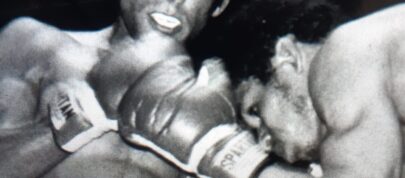
GIARDELLO STATUE DEDICATION July 21, 2025 Dick Tiger, left, and Joey Giardello pose before one of their four epic bouts.  Remembering the Career OF Joey Giardello Thanks to the members of Ring 1 and South Philly Boxing for celebrating Joey Giardello’s birthday (he would have been 95) on July 21st at Nior Restaurant, located in the neighborhood where his statue is erected and where he grew up. The statue was dedicated on May 21st, 2012. Born Carmine Orlando Tilelli on July 16, 1930, in Brooklyn, NY. He adopted the name Joey Giardello to enlist in the U.S. Army underage, using the identity of a cousin’s friend. Served in the Army during WWII and boxed while in service. After his discharge in 1948, he turned pro and settled in South Philadelphia, where he maintained this persona throughout his boxing career.  Snapshot of Career Early pro fights (1948–1950) featured mostly journeymen opponents. His first setbacks came against Joe DiMartino and other lesser-known boxers. A notorious New York commission incident involved his fight against Billy Graham, where the decision was reversed twice, eventually restored in court as Giardello’s win. It’s referred to as “The reversed reversal” in boxing lore.  First title shot: April 20, 1960, against Gene Fullmer, which ended in a grueling 15-round draw. In 1962, beat Henry Hank in a fight named Ring Magazine’s Fight of the Year. On June 24, 1963, he shocked the boxing world by defeating Sugar Ray Robinson at age 33—a performance that earned him top contender status against Dick Tiger.  December 7, 1963: Won the WBA/WBC/The Ring middleweight title by defeating Dick Tiger in Atlantic City via 15-round decision. Championship Reign.  Held the world middleweight championship from late 1963 to October 1965, defending the title four times  December 14, 1964: Defended his title against “Hurricane” Rubin Carter in Philadelphia. Despite Carter’s early dominance, Giardello rallied to win unanimously. The fight was later mischaracterized in the 1999 film The Hurricane, leading Giardello to sue over its portrayal; the case was settled out of court. Lost his title to Dick Tiger in a rematch on October 21, 1965, after struggling with weight-cutting and conditioning challenges, as documented by chronic weight issues toward the end of his reign  Final Fights & Retirement After his title loss, Giardello had just four more fights through 1967, including a decision loss to rising prospect Jack Rodgers, before retiring for good with a record 101–25–7 (with one no contest) and 33 KOs.  Life After Boxing & Recognition Post-boxing, he returned to his birth name and worked as an insurance agent and distributor. He was also active in charitable causes, especially working with intellectually disabled communities, inspired by his son Carmine Jr., who had Down syndrome.  Received several honors: International Boxing Hall of Fame induction in 1993.  Philadelphia Sports Hall of Fame induction (posthumous) in 2009. A statue erected in South Philly at Passyunk Ave. / 13th / Mifflin streets to immortalize the boxer beloved by his city. Giardello passed away on September 4, 2008, at age 78 in Cherry Hill, New Jersey. He had battled congestive heart failure and diabetes. He left behind his wife Rosalie, four sons, and a lasting legacy in boxing and his community. Thanks to: Passyunk Gym Phillyboxinghistory.com Joey Eyes      

THE CAREER OF JOEY GIARDELLO Read More »
%alt%

Timeline of boxing historical

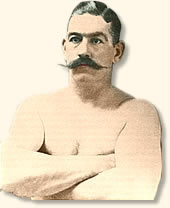
Timeline of boxing historical The “history of the fight” in boxing can refer to the evolution of the sport and some of the most significant bouts throughout its history. Here’s a breakdown of key moments in boxing history: Early Beginnings: Ancient Civilizations: Boxing dates back to ancient times, with depictions of the sport found in Egypt as early as 3000 BC. It was part of the ancient Olympic Games in Greece in 688 BC, where it was known as “pygmachia.” These early forms of boxing were brutal and often resulted in severe injuries or death, as there were few rules. Roman Era: Romans introduced boxing into their gladiatorial contests, but it became even more violent. Fighters wrapped their fists in leather thongs, sometimes adding metal studs to make punches more dangerous. The Rise of Modern Boxing (18th-19th Century): Bare-Knuckle Era: Modern boxing as we know it began to take shape in England during the 18th century. Bare-knuckle fighting, or prizefighting, was common, with fights having no time limits and continuing until one fighter could no longer continue. Jack Broughton and the First Rules (1743): Jack Broughton, a notable boxer, introduced a set of rules that are considered the precursor to modern boxing regulations. These rules prohibited hitting a downed opponent and introduced the concept of a 30-second count for a knocked-down fighter. London Prize Ring Rules (1838): These rules refined the sport by standardizing the dimensions of the ring and providing guidelines for how a bout should proceed, though fighters still used bare fists. The Marquis of Queensberry Rules (1867): Introduction of Gloves: The most significant shift in boxing history came with the introduction of the Marquis of Queensberry Rules. These rules mandated the use of gloves, introduced timed rounds (usually three minutes), and outlawed wrestling moves. Birth of Modern Boxing: These rules formalized boxing and made it a legitimate sport rather than a brutal spectacle. The gloves helped protect fighters’ hands and faces, while timed rounds and the 10-second count for knockdowns added structure to the game. Early 20th Century: Jack Johnson (1908-1915): The first African-American heavyweight champion, Johnson’s reign was historic not only for his boxing skills but also for breaking racial barriers. His dominance sparked controversy and societal debates on race. Jack Dempsey and the Golden Age (1920s): Known as the “Manassa Mauler,” Jack Dempsey was one of the first superstar athletes in America. His aggressive style and his dramatic fights, particularly against Gene Tunney, helped popularize boxing. Post-World War II Boxing (1940s-1950s): Joe Louis: Louis, known as the “Brown Bomber,” held the heavyweight title from 1937 to 1949 and is considered one of the greatest heavyweights of all time. His 1938 victory over Max Schmeling, a German boxer, was politically charged due to the growing tensions between the U.S. and Nazi Germany. Sugar Ray Robinson: Widely regarded as one of the greatest pound-for-pound fighters, Robinson dominated the welterweight and middleweight divisions during this era. His technical prowess, speed, and power made him a boxing legend. The Muhammad Ali Era (1960s-1970s): Muhammad Ali (formerly Cassius Clay): Ali is one of the most iconic figures in boxing history. He won his first world heavyweight title in 1964 by defeating Sonny Liston. Known for his charisma, fast footwork, and sharp wit, Ali became a global icon, both for his boxing achievements and his stance on political and social issues, including his opposition to the Vietnam War. Ali vs. Frazier Trilogy: The trilogy between Ali and Joe Frazier, particularly their first fight in 1971 (often called the “Fight of the Century”) and the third fight, the “Thrilla in Manila” (1975), is regarded as one of the greatest rivalries in sports history. George Foreman and “The Rumble in the Jungle” (1974): Ali faced George Foreman in Kinshasa, Zaire (now the Democratic Republic of the Congo), in a fight that became legendary. Ali’s use of the “rope-a-dope” strategy allowed him to absorb Foreman’s powerful punches before knocking him out in the 8th round. Modern Boxing (1980s-2000s): Mike Tyson (1986-1990): Tyson became the youngest heavyweight champion in history at the age of 20. Known for his ferocious style and knockout power, Tyson dominated the heavyweight division in the late 1980s. However, his career was marred by personal and legal issues, including a prison sentence for rape. Sugar Ray Leonard, Roberto Durán, Marvin Hagler, and Thomas Hearns (The Four Kings): These four fighters dominated the welterweight and middleweight divisions during the 1980s and had some of the most memorable fights in boxing history. Leonard’s 1980 fight with Duran, Hagler’s epic battle with Hearns in 1985, and Leonard’s controversial win over Hagler in 1987 are all legendary. Oscar De La Hoya and the 1990s Superstars: The “Golden Boy” De La Hoya was a major star in the 1990s, along with fighters like Julio César Chávez and Félix Trinidad. De La Hoya’s crossover appeal made him one of the sport’s most marketable stars. Floyd Mayweather Jr. and Manny Pacquiao (2000s-2010s): Mayweather, an undefeated champion, and Pacquiao, an eight-division champion, defined boxing for the 21st century. Their 2015 fight, dubbed the “Fight of the Century,” was one of the most anticipated and financially successful boxing matches of all time. Current Era (2020s): Tyson Fury and Anthony Joshua: In the heavyweight division, Tyson Fury, Deontay Wilder, and Anthony Joshua have emerged as dominant figures. Fury’s trilogy with Wilder, particularly their first and third fights, have been widely praised as among the greatest heavyweight bouts in modern history. Canelo Álvarez: Canelo is one of the biggest stars of this era, known for his skill, power, and versatility. He has dominated multiple weight divisions and continues to be a significant draw in the sport. Women’s Boxing: Rise of Women’s Boxing: Women’s boxing has gained more recognition in recent years, with fighters like Laila Ali, Claressa Shields, Katie Taylor, and Amanda Serrano helping to bring the sport into the mainstream. Shields, in particular, is recognized for her dominance and advocacy for women’s boxing equality. Influence of Boxing: Boxing has always

Timeline of boxing historical Read More »

%alt%

Joe Louis, an American Icon

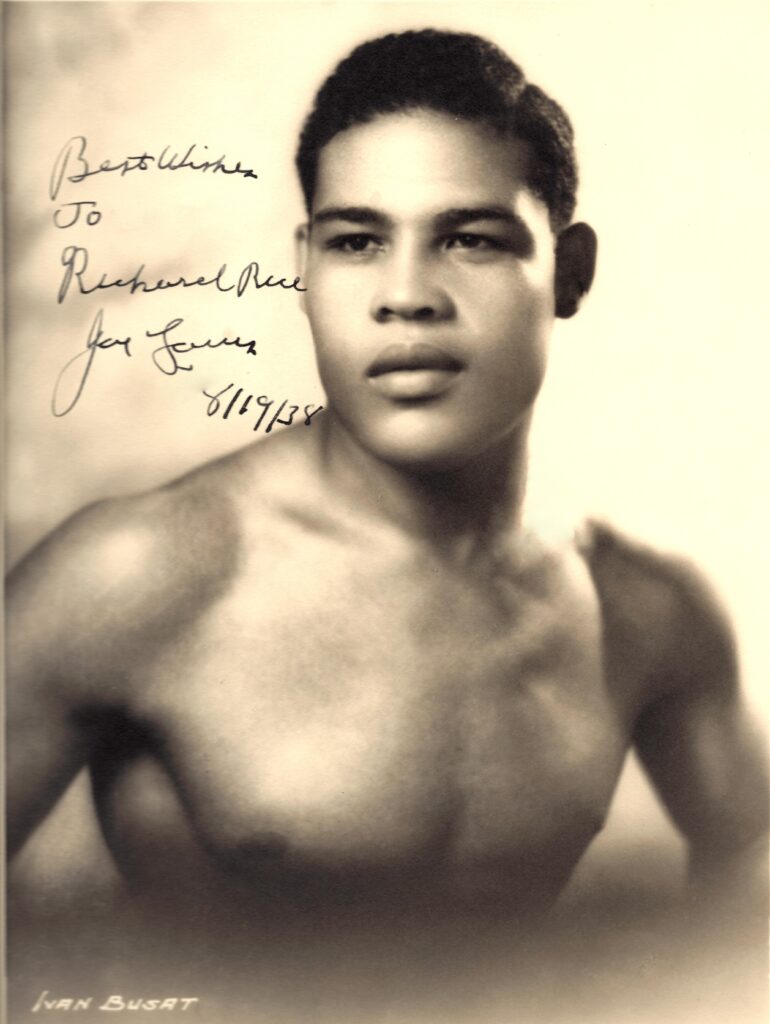
Joe Louis, professional name of Joseph Louis Barrow, American boxer known as  “The Brown Bomber.” Born in Lafayette, Alabama. Champion from 1937-1949, regarded as one of the elite heavyweight champions of the 20th Century. Louis holds the record for 25 title defenses. He won the world heavyweight title in 1937 from James J Braddock by an eighth round knockout. He retired briefly in 1949 and failed to regain the title from new champion Ezzard Charles in 1950. Prior to the Charles loss, the only other fighter to defeat Louis was Max Schmeling in 1936.  In addition to his boxing prowess, Joe Louis broke racial barriers and became a cultural icon. At a time when segregation and racial inequality were rampant in America, Louis’s success in the ring and his dignity outside of it earned him respect from people of all backgrounds. He became a hero to African Americans and was seen as a unifying figure during a divisive era.After retiring from boxing, Louis faced financial difficulties, including tax problems with the IRS, and his health declined. He passed away on April 12, 1981. Despite these challenges, his legacy as one of boxing’s all-time greats remains intact, and he is celebrated as a pioneer who transcended the sport to become a symbol of hope and resilience. Joe Louis paved the way for future African American athletes, showing that it was possible for a Black man to achieve success and be celebrated in mainstream American society. Louis’s legacy is also tied to his role in the integration of sports. While Jackie Robinson broke the color barrier in baseball in 1947, Louis’s success in boxing set a precedent that contributed to the eventual acceptance of Black athletes in other sports. Joe Louis passed away in 1981, but his legacy has lived on through numerous honors, including: Statues: There is a large statue of Joe Louis in Detroit, Michigan, his hometown, symbolizing his enduring connection to the city. Civic Honors: After his death, he was given a burial in Arlington National Cemetery, a rare honor for a civilian, acknowledging his contribution to the nation both in and out of the ring. Louis’s legacy is one of athletic greatness, cultural impact, and a role in advancing civil rights. He was a unifying figure during a divisive time in American history, and his influence is still felt today in sports, race relations, and American patriotism. Joe Louis, also known as the “Brown Bomber,” was an American professional boxer and one of the most famous heavyweight champions in the history of the sport. He held the world heavyweight title from 1937 to 1949, making him the longest-reigning heavyweight champion in boxing history. His reign lasted 12 years, and he defended his title 25 times, setting a record that still stands today. Louis was known for his powerful punching ability, disciplined technique, and calm demeanor in the ring. He fought in an era when boxing was one of the most popular sports in the U.S., and his success made him a national hero. Beyond his boxing accomplishments, Joe Louis was a symbol of hope and pride for African Americans during a time of racial segregation and discrimination in the United States. His 1938 rematch victory over German boxer Max Schmeling, after losing to Schmeling in 1936, was seen as a symbolic victory over the Nazi regime and a significant moment in both sports and political history. BULLETIN BOARD

Joe Louis, an American Icon Read More »

Shopping Cart
Verified by MonsterInsights