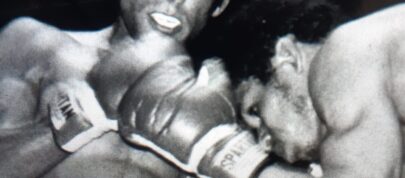
Tommy Hearns

%alt%

The Prowess of Mike MacCallum

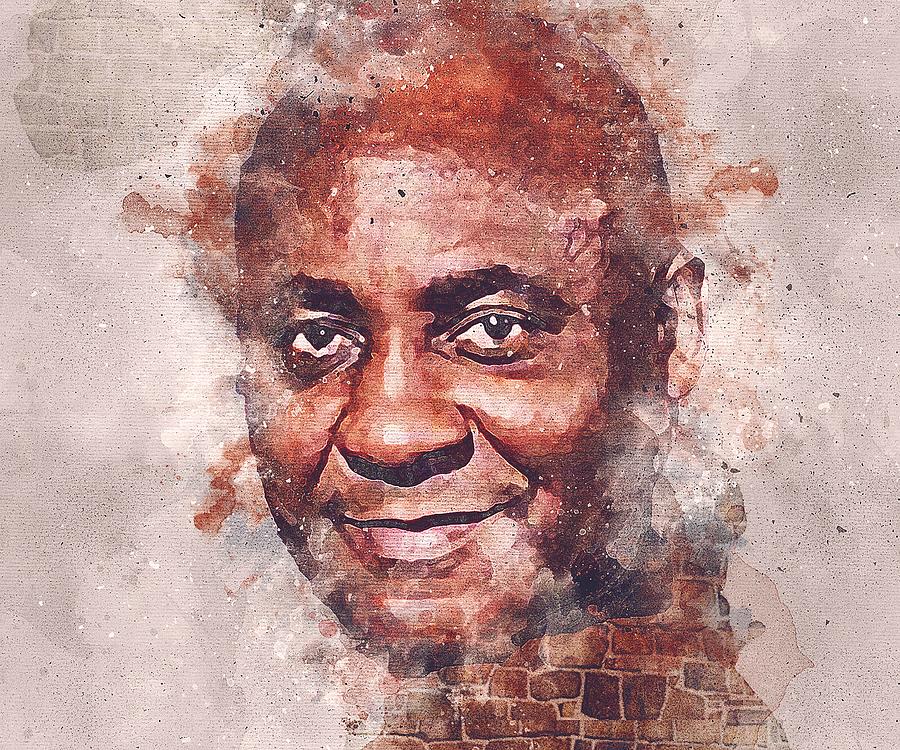
THE PROWESS OF MIKE McCALLUM Textbook boxing was the name of the game. J. Monte Mike McCallum, known as “The Bodysnatcher,” was a legendary Jamaican boxer who held world titles in three different weight classes. He was the first Jamaican to win a world title in 1984, defeating Sean Mannion at Madison Square Garden. Over his career, he fought 55 times, winning 49 bouts, with 36 victories by knockout. His exceptional body-punching ability earned him his famous nickname. But body punching was one of many skills McCallum possessed — he had an incredible jab, textbook balance, and pinpoint accuracy.  Mike’s footwork was always in position, ready for the offensive assault while awaiting a counterpunch. His career was defining, a Hall of Fame career, no doubt; yet, as a fighter, he fell between the cracks of fame and high-figure paydays.  His battle of attrition with Donald Curry in 1987 ended with a looping left hook, another asset he utilized when needed. His three fights with James Toney were nip-and-tuck, highly skilled affairs that the boxing public demands, yet are seldom satisfied. McCallum was inducted into the International Boxing Hall of Fame in 2003 and was widely regarded as one of the greatest middleweight fighters of his era. Sadly, he passed away on May 31, 2025, after falling ill while driving to the gym in Las Vegas.  McCallum’s style was built on precision and patience. He wasn’t the fastest or the most potent boxer, but his ability to dissect opponents with well-placed shots made him one of the most feared fighters of his era. His left hook to the body was particularly lethal, often setting up knockouts or forcing opponents to slow down due to accumulated damage. He was also known for his resilience—despite facing some of the world’s best fighters, he was never knocked out in his professional career. His fights against legends like James Toney, Donald Curry, and Julian Jackson showcased his ability to adapt and outmaneuver aggressive opponents. McCallum’s defensive skills were equally impressive. He had a strong chin and excellent head movement, enabling him to absorb punches without taking excessive damage. His ability to control the pace of a fight and dictate exchanges made him a nightmare for anyone who stepped into the ring with him. Top fights of Mike’s career Mike McCallum vs. Julian Jackson (1986) – McCallum faced the hard-hitting Julian Jackson, who was undefeated at the time. Despite Jackson’s power, McCallum stopped him in the second round, proving his defensive mastery and ability to withstand heavy punches. Mike McCallum vs. Milton McCrory (1987) – McCallum defended his WBA super-welterweight title by stopping McCrory in the 10th round, showcasing his ability to break down opponents over time. Mike McCallum vs. Donald Curry (1987) – McCallum knocked out Curry in the fifth round with a perfectly timed left hook, cementing his reputation as one of the best body punchers in boxing history.  Mike McCallum vs. James Toney (1991) – This was the first fight in their trilogy, ending in a controversial draw. McCallum’s technical ability and body shots challenged Toney, making it one of the most competitive fights of his career.  Mike McCallum vs. James Toney (1992) – Their rematch was another intense battle, with Toney winning by majority decision. McCallum’s ability to adapt and challenge Toney made this fight a classic.  I first encountered McCallum after he defeated Ross D’Amico in the amateurs in the late 1970s. D’Amico had been a classmate at La Salle Academy High School in Manhattan and was considered a rising star in the amateur ranks, garnering coverage on the local network. Little did I know then that the fighter who defeated Ross would become a top-ranked world boxer ten years later.  I also met him through the years, thanks to the sponsorship of Spartan and its owner, Ed Post, who had dressed him numerous times in his career. Mike was training fighters at the famous Tocco’s gym, then moved over to Mayweather’s gym when Tocco’s closed.    He had been living in Las Vegas for several years. Mike McCallum’s boxing record Mike McCallum Wiki -JLM- https://youtu.be/FbW-vNhquwY?si=bxhnEdcH2lWMpC6v Boxing Kid Management’s David Selwyn WITH Mike McCallum 1989

The Prowess of Mike MacCallum Read More »
%alt%

Timeline of boxing historical

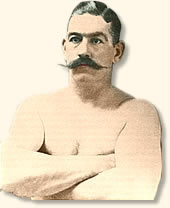
Timeline of boxing historical The “history of the fight” in boxing can refer to the evolution of the sport and some of the most significant bouts throughout its history. Here’s a breakdown of key moments in boxing history: Early Beginnings: Ancient Civilizations: Boxing dates back to ancient times, with depictions of the sport found in Egypt as early as 3000 BC. It was part of the ancient Olympic Games in Greece in 688 BC, where it was known as “pygmachia.” These early forms of boxing were brutal and often resulted in severe injuries or death, as there were few rules. Roman Era: Romans introduced boxing into their gladiatorial contests, but it became even more violent. Fighters wrapped their fists in leather thongs, sometimes adding metal studs to make punches more dangerous. The Rise of Modern Boxing (18th-19th Century): Bare-Knuckle Era: Modern boxing as we know it began to take shape in England during the 18th century. Bare-knuckle fighting, or prizefighting, was common, with fights having no time limits and continuing until one fighter could no longer continue. Jack Broughton and the First Rules (1743): Jack Broughton, a notable boxer, introduced a set of rules that are considered the precursor to modern boxing regulations. These rules prohibited hitting a downed opponent and introduced the concept of a 30-second count for a knocked-down fighter. London Prize Ring Rules (1838): These rules refined the sport by standardizing the dimensions of the ring and providing guidelines for how a bout should proceed, though fighters still used bare fists. The Marquis of Queensberry Rules (1867): Introduction of Gloves: The most significant shift in boxing history came with the introduction of the Marquis of Queensberry Rules. These rules mandated the use of gloves, introduced timed rounds (usually three minutes), and outlawed wrestling moves. Birth of Modern Boxing: These rules formalized boxing and made it a legitimate sport rather than a brutal spectacle. The gloves helped protect fighters’ hands and faces, while timed rounds and the 10-second count for knockdowns added structure to the game. Early 20th Century: Jack Johnson (1908-1915): The first African-American heavyweight champion, Johnson’s reign was historic not only for his boxing skills but also for breaking racial barriers. His dominance sparked controversy and societal debates on race. Jack Dempsey and the Golden Age (1920s): Known as the “Manassa Mauler,” Jack Dempsey was one of the first superstar athletes in America. His aggressive style and his dramatic fights, particularly against Gene Tunney, helped popularize boxing. Post-World War II Boxing (1940s-1950s): Joe Louis: Louis, known as the “Brown Bomber,” held the heavyweight title from 1937 to 1949 and is considered one of the greatest heavyweights of all time. His 1938 victory over Max Schmeling, a German boxer, was politically charged due to the growing tensions between the U.S. and Nazi Germany. Sugar Ray Robinson: Widely regarded as one of the greatest pound-for-pound fighters, Robinson dominated the welterweight and middleweight divisions during this era. His technical prowess, speed, and power made him a boxing legend. The Muhammad Ali Era (1960s-1970s): Muhammad Ali (formerly Cassius Clay): Ali is one of the most iconic figures in boxing history. He won his first world heavyweight title in 1964 by defeating Sonny Liston. Known for his charisma, fast footwork, and sharp wit, Ali became a global icon, both for his boxing achievements and his stance on political and social issues, including his opposition to the Vietnam War. Ali vs. Frazier Trilogy: The trilogy between Ali and Joe Frazier, particularly their first fight in 1971 (often called the “Fight of the Century”) and the third fight, the “Thrilla in Manila” (1975), is regarded as one of the greatest rivalries in sports history. George Foreman and “The Rumble in the Jungle” (1974): Ali faced George Foreman in Kinshasa, Zaire (now the Democratic Republic of the Congo), in a fight that became legendary. Ali’s use of the “rope-a-dope” strategy allowed him to absorb Foreman’s powerful punches before knocking him out in the 8th round. Modern Boxing (1980s-2000s): Mike Tyson (1986-1990): Tyson became the youngest heavyweight champion in history at the age of 20. Known for his ferocious style and knockout power, Tyson dominated the heavyweight division in the late 1980s. However, his career was marred by personal and legal issues, including a prison sentence for rape. Sugar Ray Leonard, Roberto Durán, Marvin Hagler, and Thomas Hearns (The Four Kings): These four fighters dominated the welterweight and middleweight divisions during the 1980s and had some of the most memorable fights in boxing history. Leonard’s 1980 fight with Duran, Hagler’s epic battle with Hearns in 1985, and Leonard’s controversial win over Hagler in 1987 are all legendary. Oscar De La Hoya and the 1990s Superstars: The “Golden Boy” De La Hoya was a major star in the 1990s, along with fighters like Julio César Chávez and Félix Trinidad. De La Hoya’s crossover appeal made him one of the sport’s most marketable stars. Floyd Mayweather Jr. and Manny Pacquiao (2000s-2010s): Mayweather, an undefeated champion, and Pacquiao, an eight-division champion, defined boxing for the 21st century. Their 2015 fight, dubbed the “Fight of the Century,” was one of the most anticipated and financially successful boxing matches of all time. Current Era (2020s): Tyson Fury and Anthony Joshua: In the heavyweight division, Tyson Fury, Deontay Wilder, and Anthony Joshua have emerged as dominant figures. Fury’s trilogy with Wilder, particularly their first and third fights, have been widely praised as among the greatest heavyweight bouts in modern history. Canelo Álvarez: Canelo is one of the biggest stars of this era, known for his skill, power, and versatility. He has dominated multiple weight divisions and continues to be a significant draw in the sport. Women’s Boxing: Rise of Women’s Boxing: Women’s boxing has gained more recognition in recent years, with fighters like Laila Ali, Claressa Shields, Katie Taylor, and Amanda Serrano helping to bring the sport into the mainstream. Shields, in particular, is recognized for her dominance and advocacy for women’s boxing equality. Influence of Boxing: Boxing has always

Timeline of boxing historical Read More »

Shopping Cart
Verified by MonsterInsights